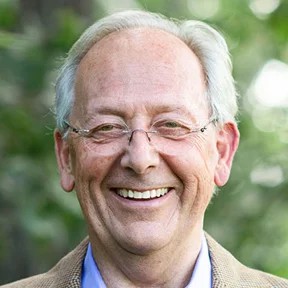
Chuck Akre
Charles T. "Chuck" Akre is the founder, chairman, and CIO of Akre Capital Management, which he launched in 1989 and built into a firm overseeing approximately $8 billion through the Akre Focus Fund and separate accounts. His investment philosophy is organized around a single framework he calls the three-legged stool: buy extraordinary businesses run by managers of skill and integrity, at valuations that allow the compounding of free cash flow at above-average rates to drive returns. Starting in the brokerage business in the late 1960s with no formal finance education — he was a pre-med student — Akre developed his approach through voracious reading, most notably Thomas Phelps' 100 to 1 in the Stock Market, which shaped his lifelong focus on identifying the rare businesses that can compound capital at extraordinary rates for decades. The Akre Focus Fund has compounded at approximately 14.9% annually since inception, consistently delivering above-average returns with below-average risk. Based in Middleburg, Virginia — deliberately distant from Wall Street — Akre and his team spend their days reading shareholder letters, proxy statements, and biographies, and regularly leave their offices to visit corporate headquarters and manufacturing facilities. He serves on the board of Enstar Group and remains one of the most articulate proponents of patient, concentrated, business-owner investing.
The Investment Puzzle: How Chuck Akre Got Started
▶ 4m 33sChuck Akre started as a pre-med student with no finance background — a clean canvas. When he entered the brokerage business in the late 1960s, he set out to solve what he calls the investment puzzle: what makes a great investor, and how do you identify a great investment? He read voraciously — John Train's The Money Masters profiled Warren Buffett and outlined the characteristics of great investors. Thomas Phelps' 100 to 1 in the Stock Market documented public companies that returned 100 times an investor's money, framing the central role of compound return. Business biography became a lifelong habit because it reveals how people behave — and behavior shapes investment outcomes.
"I started out as what I refer to as a clean canvas. I was a pre-med student. I had not had a single course in finance, accounting, economics, or anything else."
Rate of Return: The One Number That Matters
▶ 4m 26sHow do you measure a great investment if the company is private and there is no stock price? The answer: is the pile of money bigger at the end of the year than at the beginning? This simple test leads to rate of return as the core metric. Historically, public equities have compounded at roughly 9–10% annually, unleveraged, outperforming bonds, real estate, gold, and collectibles. Chuck's key insight: your return in a stock will approximate the business's ROE over time, assuming constant valuation and no distributions. This is the foundational math that drives his entire framework.
Finding Above-Average Businesses
▶ 4m 21sIf ROE drives returns, the next question is: how do you find businesses earning above-average ROE? Chuck asks the audience to guess the typical net margin of an American business — most say upper single digits. The answer is about 9%. Then he asks about MasterCard and Visa: their margins are in the mid-30s. The gap between average and exceptional is where great investments live. He demonstrates the math: a company earning 20% ROE, trading at 2x book, reinvesting all earnings — the stock price tracks ROE exactly at constant valuation. The entire game is finding businesses that can sustain above-average returns on capital.
The Three-Legged Stool: A Complete Investment Framework
▶ 3m 38sChuck kept an old-fashioned three-legged milking stool on his desk. One day he realized it was the perfect construct for what makes a valuable investment. The three legs are: an extraordinary business enterprise earning above-average rates of return that is difficult for competitors to attack; management with both skill and integrity who treat outside shareholders as partners; and the opportunity to reinvest all free cash flow at those same high rates of return. This third leg is what creates the compounding effect. Without it, you get your return but lose the exponential growth. Each leg is essential — remove any one and the stool collapses. The framework applies equally to a $100 million investment or a $10,000 one.
"That's actually a perfect construct for our notion about what makes a valuable investment."
The Penny Doubled: Why Compounding Is Staggering
▶ 1m 57sChuck asks: would you rather have $750,000, or a penny that doubles every day for 30 days? The penny becomes $10.8 million. Warren Buffett has said about compounding, either you get it or you do not. Chuck wrote Buffett a letter disagreeing — his own experience was that he did not get compounding until he experienced it firsthand. He has never been able to learn from other people's mistakes; he had to make his own. This is why the investment process, not any single insight, is what compounds over a career.
"My experience was, I didn't get it until I experienced it."
Investor vs. Speculator: Ignore the Noise
▶ 3m 21sEverything on financial television — Squawk Box, CNBC, the morning shows — is designed to create transactions, not wealth. Brokerages profit from activity; advertising-supported financial media creates false expectations. Quarterly earnings beats measured in pennies drive short-term trading, but competing against powerful computer algorithms with more information is a sure loser for the individual. Chuck's firm defines themselves as investors, not speculators. Their goal: compound at an above-average rate with below-average risk. Risk is not price volatility — it is the permanent loss of capital. The businesses they own have higher returns on capital, stronger balance sheets, and lower valuations than the market, making them objectively lower risk.
"The definition of a broker is an agent. Your advertising creates transactions. You create what I call false expectations."
Three Decades of Outperformance
▶ 3m 22sChuck presents his track record — not to boast, but to demonstrate that the thought process works. A 27-year private account compounded well above the S&P 500. A 23-year private investment partnership returned 14.25% net to partners. The FBR Focus Fund and subsequently the Akre Focus Fund outperformed their benchmarks. The combined multi-decade result is roughly 300 basis points over the S&P. In the most recent seven years, the Akre Focus Fund returned about 15% annually versus the market's 13.5%. Chuck emphasizes they spend zero time thinking about indices or benchmarks — the numbers are the outcome of the three-legged stool process, not the goal of it.
Case Studies Part 1: NASCAR, Casinos, and Cell Towers
▶ 5m 20sChuck walks through three early investments that exemplify the framework. International Speedway Corporation (NASCAR): bought at 12x earnings with 25% ROE, founder-operator owning 60% of the stock, dominant racetrack owner — a 10–20x return over a decade. Penn National Gaming: discovered through a colleague's tip, a state-licensed oligopoly with only 23 licenses in Pennsylvania, a founder who had his wife co-sign loans — another 10–20x return. American Tower: bought around $22 in 2010 at roughly 12x free cash flow, growing much faster, with new CEO Ajay Banga — a 5x return in six years. The common threads across all three: high ROE, aligned owner-operators with significant skin in the game, low entry valuations, long growth runways, and the willingness to get on a plane and meet management in person.
Case Studies Part 2: Moody's Moat and the Enstar Valuation Lesson
▶ 5m 13sMoody's demonstrates a different kind of competitive moat: after Dodd-Frank, any company issuing debt must get a credit rating, and there are only three agencies with a 40/40/20 market share locked in for nearly 100 years. It is a market-mandated oligopoly with extraordinary pricing power. Enstar provides the cautionary tale: a complex insurance runoff business that compounded book value at 20%, but Chuck paid 3x book in 2007. As the secular decline in interest rates compressed all business returns over the following decade, the stock compounded at only about 7% — despite the underlying business performing. He later bought more at $56, nearly 4x below his original purchase price, when the valuation became attractive again. The lesson: starting valuation matters enormously. A 20% compounder bought at too high a multiple can produce pedestrian returns.
"It goes back to this notion of your starting valuation. They compounded book at 20%, but it took 10 years and my return was only 7%."
Einstein, Peter Lynch, and Thinking for Yourself
▶ 3m 54sChuck closes his monologue with perspective drawn from Einstein and Peter Lynch. Einstein: make everything as simple as possible, but no simpler. Imagination is more important than knowledge. The only source of knowledge is experience. Peter Lynch's edge was observing the real world — a new store with a full parking lot — rather than relying on Wall Street research. Chuck's firm works from Middleburg, Virginia, a town with one traffic light, deliberately — the same reason Buffett returned to Omaha. Being surrounded by hundreds of bright, ambitious people in New York would be intellectually stimulating but would distract from clear thinking. And the final point: there is no single correct way to invest. This is just what works for them.
"Make things as simple as possible, but no simpler."
Q&A: Philanthropy, Struggle, and the Books That Shaped an Investor
▶ 4m 13sThe host opens Q&A by asking about Chuck's views on money and family. Chuck and his wife focus their philanthropy on land conservation, healthcare, education, and shelter. He believes strongly in letting children have their own struggles — his own financial near-misses, where assets barely exceeded liabilities, were formative experiences that made him a better investor and person. On books: he recommends Dear Chairman, about activist investors and the power of shareholder letters; Thomas Phelps' 100 to 1 in the Stock Market, the original study of businesses that compound at extraordinary rates; and Chris Mayer's 100 Baggers, a modern update on the same theme. The common thread across all three: find the rare businesses that can sustain extraordinary compounding over long periods.
"Struggle in my own life has been very valuable."
You Only Need One Great Investment
▶ 2m 30sAsked about 100-baggers in his portfolio, Chuck's answer is striking: he has only had two — Berkshire Hathaway and American Tower — and he still owns both. The real point is that you only need one truly great investment in a lifetime. A business that compounds free cash flow at 10–12% annually, bought at 16–18x free cash flow (a 5–5.6% earnings yield in a world of 1.5% Treasury yields), held for decades, does the rest. The market periodically offers opportunities to buy these businesses at discounts — during panics, when a bad balance sheet masks a good business, or when short-term headwinds create a temporary overhang. The quest is to identify them, buy them at reasonable prices, and have the discipline to hold.
"You only really need one. That's a really important issue as it relates to investing — you really only need to have one great success."
American Tower: The Tollbooth Business Nobody Saw
▶ 4m 25sAmerican Tower is positioned at the intersection of wireless communication growth the same way Microsoft sat at the intersection of personal computer growth. Each new wireless generation — 1G through 5G — requires a denser network of towers, and the towers own the real estate where antennas must be placed. The marginal return on adding a new tenant to an existing tower is north of 90%: the tower is already there, the incremental cost is minimal, and nearly all the additional revenue drops to the bottom line. But the real story is the near-death experience. In 2002, loaded with 16:1 leverage after an acquisition spree, the stock fell from the $40s to $5. Chuck got on a plane to meet the CEO and understood the business was extraordinary but masked by a bad balance sheet. He bought at $0.50 and $0.80 — it became a 100+ bagger. Yet he admits he was too timid with position sizing: did he make a mistake by not putting a lot of money to work?
"The business itself was a terrific business masked by a bad balance sheet."
When to Sell: The Hardest Decision in Long-Term Investing
▶ 3m 30sA host question about switching between positions prompts Chuck's views on selling. Selling a great compounder is one of the hardest things to do — it is difficult to identify something better and even harder to time the switch correctly. For most investors, owning fewer things and holding them is the better decision. But valuation extremes do matter. He uses Markel as an example: bought at 3x book while the company was compounding book at 20% annually. Over time, the valuation expanded to roughly 10x book — well beyond what the underlying compounding could justify. He lightened up. In hindsight, it was the right call: at 10x book, the math of future returns had shifted decisively against him, even though the business itself remained excellent. Sometimes selling is correct with imperfect foresight.
"If you've got 10 positions that have all got high rates of compounding and you say, well I'm going to just lighten up a little bit here and buy some more there, that's probably a bad decision."
Moody's vs. S&P: Why Culture Matters
▶ 3m 16sThe final audience question: why Moody's over S&P when they share the same credit rating duopoly? Chuck's answer is revealing. During the financial crisis, both rating agencies were investigated. S&P paid a much larger settlement because the SEC found incriminating internal emails — people acknowledging what they were doing was foolish and continuing anyway. At Moody's, no such evidence existed. For Chuck, this cultural difference was decisive — it spoke directly to the integrity leg of the three-legged stool. He initially refused to invest in Moody's because their crisis behavior was, in his words, atrocious. It took several meetings with the CEO over multiple years before he became comfortable. He closes by noting they own both Visa and MasterCard, and SBA Communications alongside American Tower, but concentration limits in the mutual fund prevent owning both Moody's and S&P.
"Their behavior during that prior crisis was stupid, and it wasn't illegal. There was no such evidence of that at Moody's."