
Jack Schwager
Jack Schwager is the author of the Market Wizards series, widely regarded as the most important collection of trading books ever written. Over four decades he has conducted hundreds of in-depth interviews with the world's elite traders — from Paul Tudor Jones and Bruce Kovner to anonymous retail traders with extraordinary records — distilling their methods, mindset, and habits into principles that remain relevant across all market eras. What sets Schwager's work apart is his ability to extract hidden commonalities across wildly different trading styles: whether the subject is a global macro manager overseeing billions or a technical swing trader working from charts alone, the same themes emerge — disciplined risk management, consistency of process, psychological resilience, and the relentless pursuit of a genuine edge. The Market Wizards series has sold millions of copies worldwide and remains essential reading for anyone serious about understanding how elite performance in financial markets is actually achieved — not just in theory, but in practice, by real people, across decades of market cycles.
Books
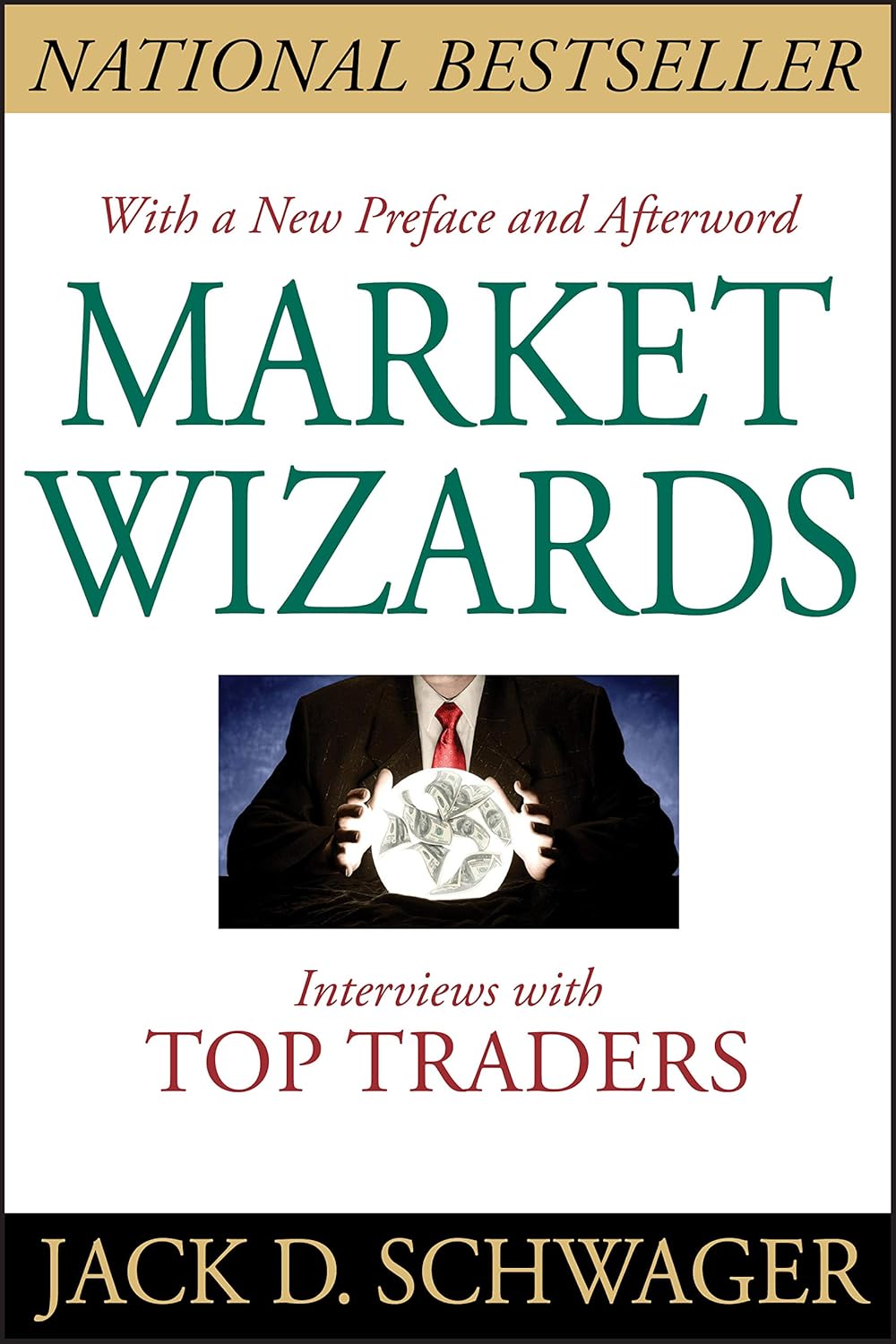
The book that started it all. Schwager's first volume features in-depth conversations with the top traders of the 1980s — Michael Marcus, Bruce Kovner, Paul Tudor Jones, Ed Seykota, and Marty Schwartz — each of whom turned modest accounts into extraordinary fortunes through methods as different as their personalities. What Schwager found, and what makes the book essential, is the pattern beneath the diversity: every wizard managed risk with discipline, cut losses without hesitation, and operated within a clearly defined edge rather than chasing every opportunity. The traders speak candidly about their methods, their failures, and the psychological demands of markets — creating a rare document of elite performance that remains as relevant today as when it was first published.
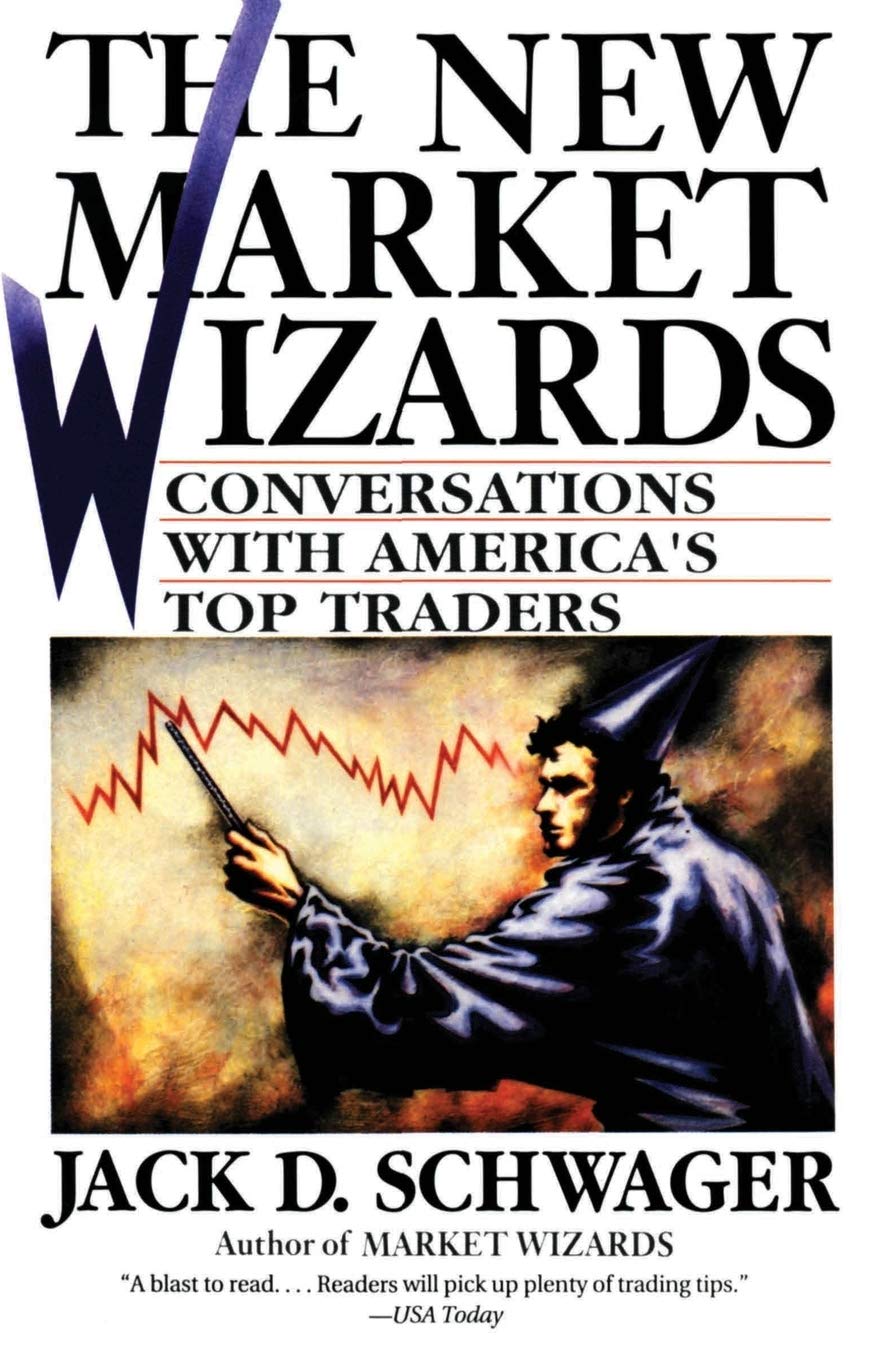
The second volume expands the scope of Schwager's inquiry to include quantitative traders, behavioral economists, and trading psychologists alongside traditional discretionary traders — establishing early that elite market performance is inseparable from self-knowledge and mental discipline. Featured subjects include William Eckhardt, co-creator of the legendary Turtle Traders experiment, who explains the fundamental role of probability and expectancy in building a sustainable edge. The interviews reinforce the central theme of the series: no single trading methodology dominates, but every successful approach shares a relentless consistency between stated principles and actual execution under pressure.
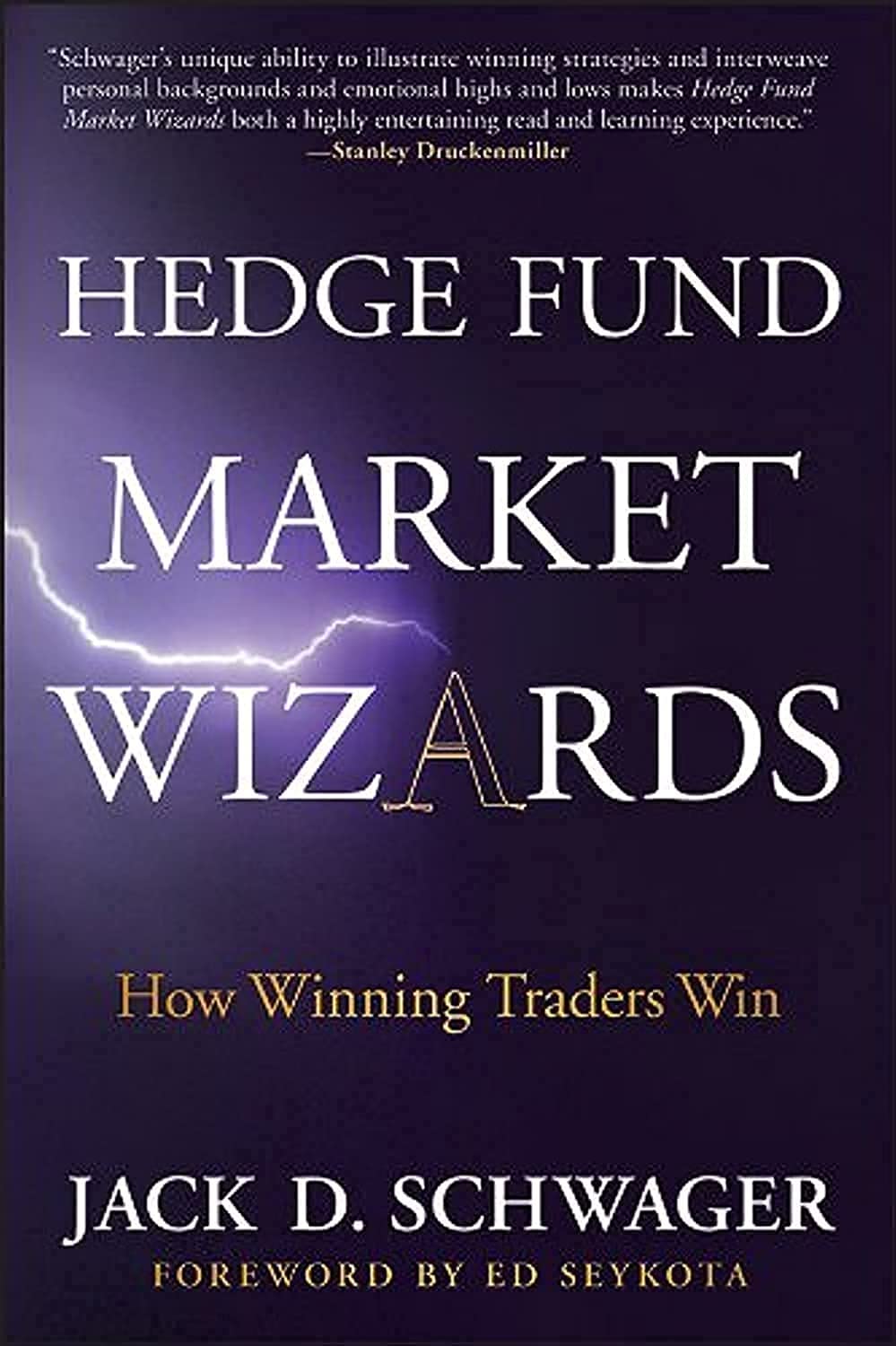
The fourth volume shifts focus to institutional traders managing billions across global macro, equity long/short, and quantitative strategies — offering a perspective on risk and return that most individual traders never encounter. Featured subjects include Colm O'Shea, Ray Dalio, Joel Greenblatt, and Edward Thorp, each operating at a scale and rigor that reveals how professional money management differs fundamentally from most retail approaches. Schwager applies a rigorous analytical framework to evaluate each trader's return stream beyond raw performance — adjusting for risk, correlation, and consistency — challenging readers to think about what a real edge actually looks like when examined systematically rather than through headline numbers alone.
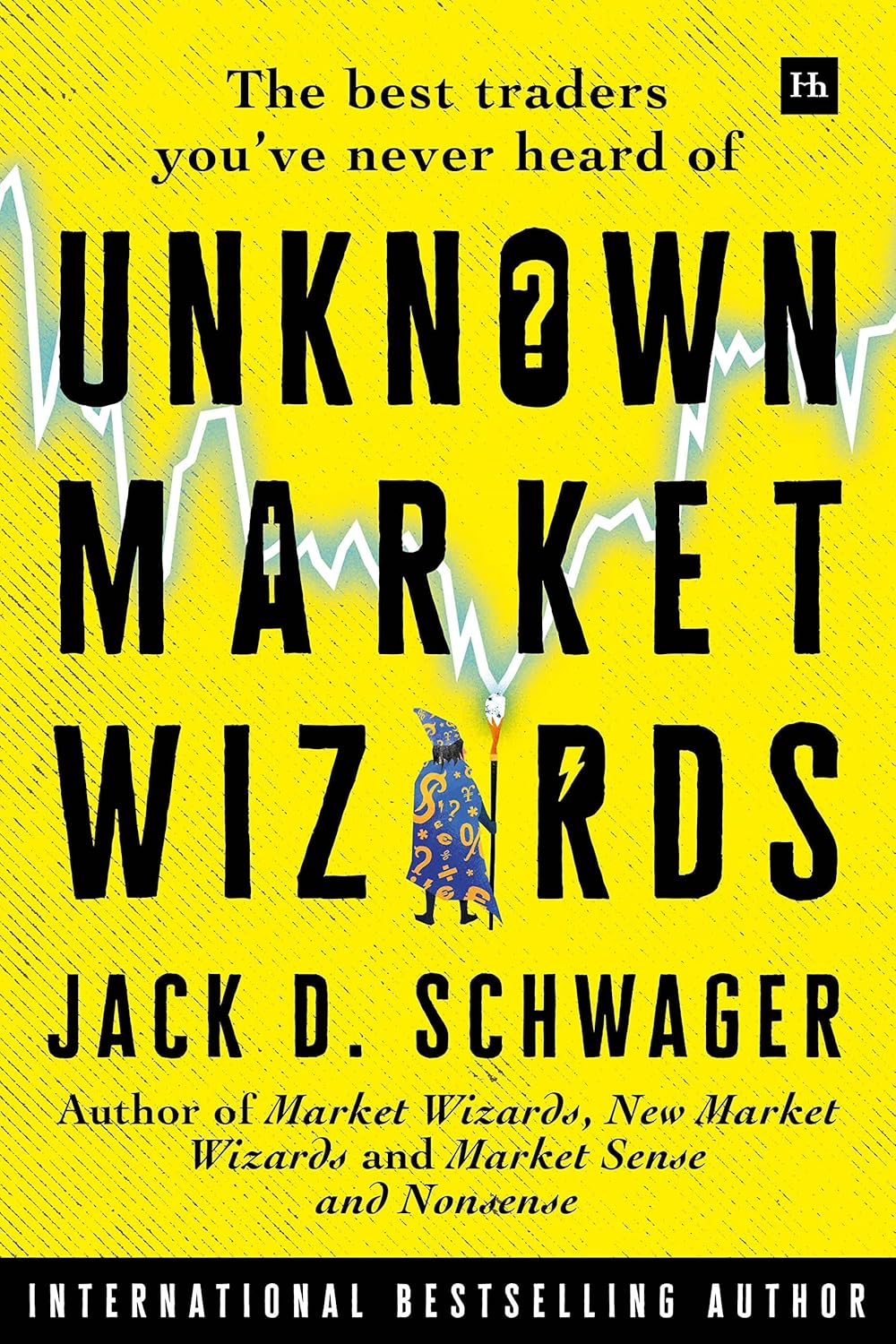
The most unconventional entry in the series, featuring traders with extraordinary track records who have never appeared in financial media — chosen specifically because their anonymity makes them impossible to dismiss as lucky outliers. The book makes a deliberate argument: elite trading performance is not limited to institutional giants or market celebrities, but is achievable by disciplined individuals who have built a genuine, repeatable edge and the psychological infrastructure to apply it consistently. The subjects range from a grain trader in rural Illinois to a physician-turned-trader managing a multi-million dollar account between hospital shifts — each a compelling case study in what disciplined process, continuous self-improvement, and emotional control can achieve entirely outside the spotlight.
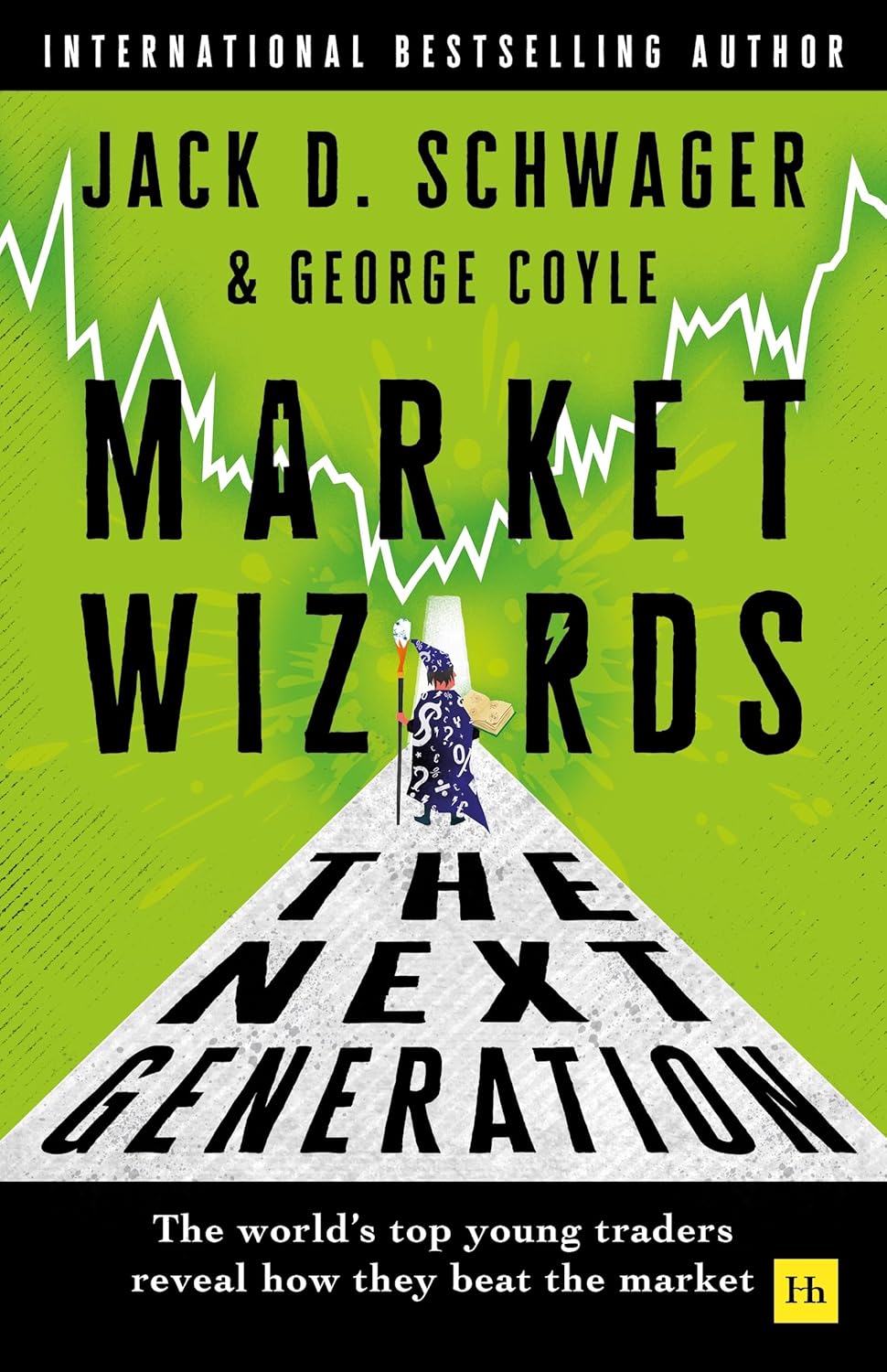
The sixth installment in the series, continuing Schwager's decades-long project of documenting how elite market performance is achieved across different eras, styles, and market environments. Featuring a new generation of traders operating in markets shaped by algorithmic competition, social media, and rapid structural change, the book examines whether the core principles identified in the original Market Wizards remain relevant — and what has changed about the craft of trading in a more complex, information-saturated environment. Forthcoming June 2026.
Videos


The $15 classified ad that launched a career in markets
▶ 4m 9sSchwager explains that unlike many of the traders he would later interview, he never planned to be in markets. An Ivy League economics grad who expected to find work immediately, he placed a $15 classified ad in the New York Times asking for any analytical role and received 15 responses — 14 of them sales schemes. The one legitimate call was for a commodity analyst position. In the interview, asked what he knew about commodities, he answered 'gold' — embarrassingly little. He spent a week in a Brooklyn library absorbing everything on copper from yearbooks and trade publications, wrote an article that circulated around the office, and was told afterward that everyone said 'pick this guy.' Writing had already become the skill that opened every door.
"I said something like 'gold' — and it's embarrassing how naive I was. But I spent a week in that library reading everything I could on copper, and it was that article that got me the job."
Research before computers — hog supply models and weekly letters by hand
▶ 4m 27sSchwager describes what commodity research actually looked like in the early 1970s, before screens or PCs. Assigned four markets — sugar, cotton, cattle, and hogs — he constructed supply-demand models by hand using USDA statistics, import-export data, and historical prices. Regression analysis was done on a hand calculator. Prices were tracked on ticker boards that clicked as they changed. His output was a weekly market letter mailed to brokers and clients. The entire process was fundamental economic analysis with no technical tools whatsoever — and he was actively dismissive of chart analysis, as any academic-trained economist of the era would be.
"You didn't have any screens, you didn't have a computer. You had those huge boards in the front of the room that would click as the price changed."
Writing the textbook that did not exist — the 800-page hand-written Complete Guide
▶ 2m 39sAfter twelve years in the business, Schwager decided no good textbook on futures market analysis existed and took a sabbatical to write one — with no commercial ambition, just wanting the best possible reference. He spent a year writing nearly 800 pages by hand; a planned single chapter on regression expanded to six because he could not explain it without first building the statistical foundation. The process was painstaking: correspondence with universities for obscure research, constructing every statistical table by hand, writing and rewriting until it was the book he would want to read himself.
"I just wanted to write the best textbook on analysis of futures markets. The idea of selling a lot of copies was not in my mind at all."
How the Complete Guide became the catalyst for Market Wizards
▶ 5m 9sThe book's credibility and reach led directly to the Market Wizards concept — publishers approached Schwager because the textbook established him as an authority who could bridge rigorous analysis with accessible writing. When it published, a Wall Street Journal review by Stanley Angrist sold out the first printing overnight — but the publisher took months to reprint copies, blowing the initial momentum. Despite that misstep, the book has continued to sell year after year. The deeper impact: people wrote to Schwager saying they entered the trading business because of his books, something he never anticipated when he started writing.
What Schwager was always searching for — timeless truths about trading
▶ 4m 15sSchwager explains the central mission across all five Market Wizards books: finding what explains why some traders succeed where so many others do not. The answers had to have long-term truth — principles that stayed valid as markets transformed from open-outcry pits to electronic trading, from no computers to supercomputers, from few quants to entire firms of them. His model was Reminiscences of a Stock Operator, written about Jesse Livermore in the 1920s but still resonant when Schwager read it 65 years later. The explanation for why trading wisdom stays relevant across such radically different market structures is simple: what does not change is human nature.
"What makes you successful where so many other people aren't? The answers to that are things that have long-term truth — which stay true even though markets change tremendously. What doesn't change is human nature."
How Schwager found the unknown traders — emails, FundSeeder, and Twitter
▶ 3m 17sFor Unknown Market Wizards, Schwager focused on solo traders nobody had heard of. One of the book's most extraordinary subjects — a trader who turned $5,000 into $250 million — emailed him out of the blue years earlier; Schwager filed it, started the book, contacted him, and received verified monthly brokerage statements going back nearly twenty years. Others came through FundSeeder, a trading analytics platform that surfaced traders with exceptional risk-adjusted returns, or via Twitter callouts. Peter Brandt, a close personal friend, was included specifically so his market wisdom could be preserved for posterity.
"He just emailed me out of the blue — and I had filed it away. When I started Unknown Market Wizards, I contacted him and he sent me his monthly brokerage statements going back nearly twenty years."
Personal connections, Jim Rogers, and why every subject got to review the draft
▶ 3m 30sThe first Market Wizards book relied entirely on personal connections — Michael Marcus and Bruce Kovner were colleagues from Commodities Corporation, and Jim Rogers was already a known figure. Schwager contrasts this with the later books where he had to build trust with complete strangers. A universal technique across all books: offering every subject the right to review the final draft before publication. This assurance was not just helpful in getting the interview — it was critical in getting people to speak openly. When subjects know they can correct anything they regret saying, they drop their guard and the real conversation happens.
"I'll let you see a copy of the final draft, and you can review it — if there's anything wrong we can change it. That assurance was helpful in getting the interview, but more importantly in getting them to be open."
Why Schwager abandoned fundamentals — technical analysis is naturally compatible with risk management
▶ 6m 51sSchwager worked exclusively as a fundamental analyst until he noticed that his colleague Steve Kroll, the one technical analyst in the group, was more right than wrong more consistently than anyone else. That forced him to take it seriously. The deeper insight: fundamental analysis is structurally incompatible with risk management. If you're bullish on wheat at $5 and it drops to $4.50 with fundamentals unchanged, the rational fundamental response is to buy more — exactly the opposite of what risk management requires. Technical analysis solves this cleanly: if price goes against your analysis, the analysis is by definition wrong, giving you a natural, unambiguous stopping point regardless of whether you trade with the trend or against it.
"Fundamental analysis is, in many ways, very difficult to make compatible with risk management. The more things go against you — if the fundamentals don't change — the more it would have you adding to the position. That's exactly the opposite of what you should be doing."
Tom Baldwin on St. Patrick's Day — the hardest interview of Schwager's career
▶ 3m 22sSchwager describes the challenges of interviewing traders who gave him minimal time — Richard Dennis and Ray Dalio each gave him only one hour, twice. His most intense experience was Tom Baldwin, a pit trader executing Morgan Stanley-sized bond volume for his own account, interviewed on St. Patrick's Day in Chicago when everyone was heading to the bars. Schwager felt like 'a photographer trying to get a picture of a rare bird about to fly away.' He had to have the next question ready before Baldwin finished answering. The lesson: adapt your interview approach to the subject — some need you to slow down, others need you to keep up at their speed.
"I felt like a photographer trying to get a picture of a rare bird that was about to fly away in an instant — I had to have another question ready before he could even finish answering the last one."
The Gary Bielfeldt discovery — finding a bond trading legend through wire service mentions
▶ 4m 14sSchwager tells the story of discovering Gary Bielfeldt (BLH), a bond trader working from Peoria, Illinois, who was so unknown that Schwager first learned of him through wire service mentions of unusually large trades. When Schwager cold-called him, Bielfeldt's phone interview was painfully sparse — short answers, no elaboration. But the story of how Schwager found him — noticing a pattern of massive bond trades from an address nobody recognized — illustrates the reporter's instinct that drove the series: follow the data trail, and sometimes you find a wizard hiding in plain sight.
Trading vs gambling — why an edge is everything
▶ 3m 9sSchwager draws a clean line between gambling and trading. Gambling structurally puts the odds against you — the house always has the edge. Successful trading is the opposite, but only if the edge is real, definable, and understood. He cites Bob Dylan's line 'you can't win with a losing hand' as the clearest expression: you must know what gives you your edge or you are gambling regardless of what you call it. Without a specific, articulable reason why your approach can overcome the market's built-in edge against you — commissions, slippage, information asymmetry — you cannot win over time.
"You can't win with a losing hand — and it's not obvious to a lot of people, but you have to understand what your edge is. If you don't have some reason why you can beat the built-in edge against you, you cannot win."
You have to love the game — the one trait every Market Wizard shares
▶ 3m 3sBeyond having a genuine edge, nearly every wizard Schwager interviewed shared one trait: they genuinely loved trading as a puzzle or game — not for the money, but for the intellectual challenge. Bruce Kovner called it three-dimensional chess; Jim Rogers described it as a puzzle where pieces are constantly being swapped out. The trader who turned $5,000 into $250 million got into markets for the wrong reason — money — but discovered he loved the process of spotting trends, and that love is what made him great. The last line of the original Market Wizards captures it: you have to love what you're doing.
Can anyone be a great trader? Schwager says no — innate skill is real
▶ 2m 56sSchwager answers clearly: no. Just as not everyone can be a great athlete or musician, not everyone can be a great trader. Many of the wizards he interviewed had genuine innate market intuition that analytical work simply could not replicate. His clearest example: when Schwager was deeply bullish on cotton based on exhaustive historical research, Michael Marcus said it would go far higher — not because of better data, but because he intuitively understood that China's first year as a cotton buyer was the single variable that mattered. The price went from 25 to 99 cents. Schwager had the analysis; Marcus had the insight.
"He didn't do any of the analysis I did — but he just knew that the fact that China was a buyer that year was the key. And he stayed bullish for months and months while the price kept going."
How important is timing? It depends entirely on your approach
▶ 2m 49sSchwager explains that the importance of entry timing varies dramatically by methodology. A long-term fundamental investor may have a thesis that plays out over years — precise timing at the day or week level matters far less than getting the structural call right. A short-term technical trader, by contrast, lives and dies by timing precision. The key is not to judge one approach by the standards of the other. The right question is not 'how important is timing?' in the abstract — it is 'how important is timing given the specific approach I am trading?'
Stepping on the accelerator — why great traders size up when conviction is highest
▶ 4m 37sSchwager addresses the widespread 1% risk rule and acknowledges it is sound advice for most traders most of the time — but identifies a critical exception documented repeatedly across all five books. When conviction is very high and opportunity is clear, the great traders step on the accelerator. He tells the Druckenmiller story: when Druckenmiller showed Soros a billion-dollar position in the Deutsche mark ahead of German reunification, Soros asked 'you call that a position?' Schwager also describes Soros's Plaza Accord trade — when the yen surged 700 points overnight, Soros stopped traders from taking profits: 'The Fed just told me the yen is going up for a year. Why would I sell it on the first day?'
"Soros asks him 'how big's your position?' He says a billion. Soros says 'you call that a position?' — if you're that sure, why do you only have a billion on?"
What intuition really is — subconscious experience, not instinct from nowhere
▶ 3m 5sSchwager offers his most precise definition of trading intuition: it is subconscious experience, not instinct pulled from thin air. When a skilled trader has a hunch, it is triggering pattern recognition from thousands of past market situations they cannot consciously identify — the connection is real even if it is invisible. He references Bill Eckhardt's insight that human emotions lead to worse-than-random results, and explains the contra-emotional signal: for some traders, the feeling of wanting to triple up on a winning position is a reliable indicator that a reversal is imminent. The body reacts to market patterns the conscious mind has not yet processed.
"Intuition, in my mind, is subconscious experience. When you have a hunch, it's not pulled out of thin air — it's triggering something from your experience that you may not consciously recognize, but it's there."
Schwager's personal test of intuition — the Swiss franc trade he almost cancelled
▶ 4m 15sSchwager shares his own experience with trading intuition. He placed a buy order in Swiss francs at a specific price level, and when the market approached his order, he found himself hoping it would not get filled — a visceral signal that his experience was warning him away. Recognizing that his emotional resistance was the exact contra-emotional pattern he had documented in other traders, he forced himself to leave the order on. The trade worked. The lesson: sometimes the most valuable trading signal is noticing when your own emotions are telling you the opposite of what your analysis says — and going with the analysis.
Know your exit before you enter — Bruce Kovner's ten words of trading wisdom
▶ 3m 28sIf Schwager could give traders a single piece of advice in ten words, it would be Bruce Kovner's rule: 'Know where you will get out before you get in.' Defining the exit in advance eliminates the single most agonizing moment in trading — standing in a losing position asking yourself whether to stay or go, with every rationalization pulling you toward staying. If you define the risk before you take it, the decision is already made. You do not have to think; you execute. That pre-planned exit point also protects you from the market's ability to turn a small loss into a catastrophic one through hesitation.
"Know where you will get out before you get in. Before you enter, you have no horse in the race — you are thinking completely clearly."
Why you can only think clearly before you have a position
▶ 2m 32sThe reason Kovner's exit rule works is psychological. The only moment of true objectivity is before you enter a trade. The minute you put a position on, every subsequent piece of information gets filtered through the lens of what you want to happen — you rationalize, you hesitate, you invent reasons to stay. This is not a character flaw; it is how human cognition works. But knowing this in advance lets you design around it. Decide the exit at the moment of pure objectivity, write it down, and trust that decision more than any thought you have once you are in the trade.
"The only time you have true objectivity is when you do not have a position. The minute you put that position on, you've lost your objectivity."
25% a month for a decade — the extraordinary return records Schwager has verified
▶ 3m 20sSchwager revisits some of the extraordinary track records he has encountered across five books, including a trader who made roughly 25% per month for nearly a decade — documented and real. He explains why this does not compound to an absurd fortune: short-term traders cannot let accounts grow without moving the market against themselves. Many pull capital out consistently and keep trading size flat — the account value stays in a manageable range while the withdrawals fund their actual lifestyle. The 300%-per-year trader on $50,000 is not a billionaire because they cannot deploy billions the same way they deploy thousands.
"He was making 25% a month over nearly ten years. I know a lot of people are thinking — why doesn't he have one-fifth of the GNP? Because he wasn't compounding. He kept pulling the money out."
Why percentage returns shrink as capital grows — the structural limit of scaling
▶ 3m 13sAt larger AUM, percentage returns necessarily compress because the manager becomes a price factor. Schwager uses Bruce Kovner as an example: Kovner averaged 88% per year as an individual trader but could never approach that at $20 billion. The question is not whether a given return is possible — it is at what size it is possible. The trader who prints 300% per year on $50,000 simply cannot replicate it at $5 billion. This is not a failure of skill; it is a structural reality of markets: every strategy has a capacity constraint, and the great traders understand exactly where theirs sits.
Why monthly profit targets destroy trading performance
▶ 3m 1sOne observation from Unknown Market Wizards: traders who set monthly profit targets consistently underperform. The reason is mechanical — any approach will have months with abundant opportunity and months with very few. Forcing trades when the market is not offering them is precisely how you destroy a genuine edge. The market does not care about your targets, your bills, or your desire for a smooth equity curve. The traders who succeed are those flexible enough to take what the market gives — aggressive when conditions align, patient and small when they don't.
"The market is not a machine that constantly favors every particular approach every month. If your mindset is 'I'm going to make the same percent every month,' you'll find yourself taking trades you shouldn't take."
What changed from the first Market Wizards to the latest — and what did not
▶ 3m 46sWhen the host asks what changed across the three-decade span of the Market Wizards series, Schwager is definitive: the core findings were essentially unchanged. Electronic trading, computers, quantitative firms, and new markets transformed the infrastructure of trading but not its principles. What made traders great in 1989 — discipline, genuine edge, risk management, love of the game — still makes traders great today. The technology changes how trades are executed; it does not change why some traders win and most lose.
Crypto, tulip bulbs, and South Sea — Schwager on historical market manias
▶ 3m 21sSchwager compares crypto to the dot-com bubble: a handful might survive and thrive, but most will ultimately be worthless — and that does not mean they were not tradable in the interim. NFTs had all the hallmarks of classic mania: speculative frenzy detached from any underlying cash flow or utility. He places these episodes in the long history of market manias — tulip bulbs, the South Sea bubble, internet stocks — where the same pattern repeats: a real innovation attracts genuine capital, then speculative excess overwhelms rational pricing, and the cycle ends with most participants losing most of their money while a few survivors build lasting businesses.
GameStop and why the efficient market hypothesis is wrong
▶ 4m 19sThe host asks whether the GameStop episode proves that price is driven by buyers and sellers rather than fundamentals. Schwager goes further: GameStop is his cleanest illustration of why the efficient market hypothesis is wrong. A stock moving from $20 to $500 with no fundamental change, then returning to $20 within months, cannot be reconciled with market rationality. DJT stock trading at billions with negligible revenue is a similar case. Schwager notes a telling signal in the options market: when puts are dramatically more expensive than calls — as they are in DJT — the market itself is signaling the irrationality through the pricing of risk.
"GameStop goes from 20 to 500 with no real change in anything — and then it goes right back down. That is what the market looks like when it is being driven by human emotion, not by value."
Glitch traders, technicians, fundamentalists — why everyone thinks their way is the only way
▶ 2m 50sSchwager describes traders who built edges from glitches — one made hundreds of millions exploiting a pricing discrepancy in a single brokerage platform — as evidence that edges can come from entirely unexpected places. He then addresses the perennial debate between technical and fundamental traders. Each camp tends to dismiss the other: Jim Rogers famously said he never met a rich technician except those who sell their services. But the dismissal works both ways — and both sides have produced fortunes. The conviction that only one approach can work is false, but it is a conviction nearly every successful trader holds.
Trading your personality — why both Rogers and Schwartz were right
▶ 3m 10sSchwager explains why traders have such fierce convictions that only their approach works — and why they are simultaneously right and wrong. Jim Rogers built his wealth on pure fundamental analysis; Bonnie Schwartz spent ten years as a fundamental analyst losing money, then got rich as a technician. Both are right about their own approach; neither is right about dismissing the other's. The conclusion: successful traders ultimately trade their personality. Finding an approach that genuinely fits your temperament — your patience, your risk tolerance, your information processing style — is more important than finding the abstractly 'correct' method.
"Fundamental analysis works for Rogers. Technical analysis works for Schwarz. It goes down to being critical that every trader find an approach that works for them."
How trend following's edge eroded — and why popularity eventually kills any approach
▶ 4m 30sSchwager traces trend following from Ed Seykota's era in the late 1960s — when running a simple moving average program on a brokerage firm's mainframe over the weekend was so unusual that the edge was enormous — to today, when every retail trader has access to the same tools and concepts. As trend following became widely known and universally taught, the edge degraded: more practitioners created more fake breakouts and shorter-term counter-trend moves that made staying in trends far harder. The underlying rationale still holds — real supply-demand imbalances take years to resolve, so genuine trends exist — but the return-to-risk ratio has compressed substantially.
"Once it becomes too popular, you start getting a whole bunch of fake breakouts and very short-term wild swings. The trends are still there, but they become choppier — and the edge that once printed money is now much smaller."
Trader routines, the origin of the 'Market Wizard' term, and the WSJ review that sold out overnight
▶ 3m 52sSchwager observes that successful traders rarely matched the lavish social-media image — many were intensely focused professionals with structured routines: Peter Brandt does his chart analysis every Friday without fail; traders in Unknown Market Wizards maintained detailed written reviews of every trade, reviewed monthly. Schwager admits he cannot remember where the term 'Market Wizard' came from — it sounded right and stuck. He also reveals that the first printing of the original Market Wizards sold out overnight after a single Wall Street Journal review — and the publisher took months to reprint, a missed opportunity that still frustrates him.
No more books — and Schwager's parting advice for interviewers and content creators
▶ 3m 50sSchwager says he has no plans for another book — he is retired from writing, and the most recent Market Wizards volume is likely the last. If he ever did another, he jokes he would title it 'The Last Market Wizards.' He closes with advice drawn from a career spanning five decades of conversations with elite traders: think in terms of conversation, not questionnaires — listen to what the other person says and follow the tangents that open up. Strive for excellence in every aspect of whatever you do. And only do it if you genuinely love it, because that passion is what separates the people who endure from those who burn out.
"Think in terms of conversation — listen to what the other person is saying, because the answers will often lead to better tangents than the questions you planned to ask."
How Market Wizards Discover Their Passion for Markets
▶ 3m 24sSchwager opens with Kristjan Kullamägi — a security guard who turned $5,000 into over $100 million — as a lens for exploring how market wizards develop. He observes that many great traders developed an unusual passion for markets as early as high school, a rarity at that age. He recalls Steve Conn telling him about going to brokerage offices during lunch just to watch the tape, and notes that in his upcoming book he’s finding traders who started as young as 13. Sometimes the catalyst is a high school teacher running a trading contest — an unexpected hook that sparks a lifelong obsession with markets.
Why Nearly Every Market Wizard Blew Up First
▶ 2m 40sAnother common theme that initially surprised Schwager but has proven near-universal: nearly every great trader suffered a devastating early blowup. He argues this is not incidental — suffering a major loss imprints a visceral, lasting respect for risk that no textbook can replicate. Ray Dalio’s pork belly disaster, watching the market go limit-down against him for days, is cited as the formative experience that permanently shaped his approach. Schwager notes that some prop firms deliberately prefer to hire traders who’ve blown up, reasoning that those who haven’t don’t truly understand what they’re risking. Initial failure, he concludes, is much more common than initial success among the traders he’s profiled.
Risk Management: The One Lesson Every Market Wizard Agrees On
▶ 3m 21sWhen asked to name the most important trait across all his Market Wizard interviews, Schwager leads without hesitation: risk management, in one form or another, is the single most common answer. The most concise formulation came from Bruce Kovner in exactly ten words: “Know where you’ll get out before you get in.” This rule forces traders to commit to a loss threshold before emotions enter the picture — at the moment of entry, rather than during a live losing trade when psychology works against clear thinking. Schwager notes that virtually every failed trader he’s encountered ignored this principle: they entered positions without a defined exit and improvised under pressure.
"Know where you’ll get out before you get in."
Patience: The Underrated Edge in Waiting and Letting Winners Run
▶ 3m 51sSchwager’s second key trait — one he considers underappreciated — is patience, which operates in two distinct modes. The first is the patience to wait for the right trade: resisting the urge to always be in the market and sitting out when conditions don’t meet your criteria. The second is staying with a position long enough to realize its full potential — many traders cut winners too early, locking in small gains while their best trades are still running. Schwager notes that holding through noise and drawdowns in a profitable position is psychologically harder than it sounds, and that traders who master this skill generate returns far above those who exit at the first sign of strength.
Inside the Next Market Wizards Book: Standout Traders and the Upcoming Release
▶ 4m 25sSchwager previews “Market Wizards: Next Generation,” co-authored with George Coyle — who, Schwager reveals, was the catalyst for the project, having pushed for a new book through their ongoing conversations. He discusses Kristjan Kullamägi as a standout interview: a trader whose arc from security guard to $100 million captures the essence of what the series looks for — not just the outcome but the complete journey of failure, learning, and eventual mastery. The book marks the first time Schwager has worked with a co-author, and he credits Coyle’s involvement with both revitalizing his motivation and bringing fresh perspective to a series he has been building for decades.
Chris Camillo: Finding Edge in Social Media Sentiment
▶ 2m 26sSchwager highlights Chris Camillo, who built an extraordinary track record by analyzing consumer behavior trends on social media before they registered in financial data. Camillo’s method involves spotting brand and product trends on platforms like TikTok months before mainstream attention arrives — his first trade came from noticing a retail location being displaced by another brand and asking his broker brother how to profit from the observation. Schwager admits he would have dismissed Camillo’s approach as noise earlier in his career, but the documented multi-million dollar track record proves otherwise. Camillo uses no technical analysis — his edge comes entirely from observing what consumers are actually doing and buying in real time.
Jimmy Balodimas: The Contrarian Trader Who Breaks Every Rule
▶ 3m 1sSchwager introduces Jimmy Balodimas, a prop trader at First New York whose approach defies conventional wisdom. Balodimas is not just contrarian — he actively fights every trend, often to his own detriment in individual trades. Schwager discovered him through his son, whose first job out of college was as Balodimas’s trading assistant and who kept insisting his father wouldn’t believe this trader. Despite Balodimas seeming to break every rule, he succeeds through an extraordinary talent for trading around a position: entering and exiting in increments, taking quick profits on counter-moves, and adjusting size dynamically. His background in auction-market theory — reading price as a dynamic negotiation between buyers and sellers — gives him a structural understanding of markets most screen traders never develop.
Trading Around a Position: Why Trades Shouldn’t Be Binary
▶ 2m 23sSchwager extracts a broader lesson from the Balodimas interview: most traders think of trades as binary — you get in at X and out at Y — but the real edge comes from trading around the position. Using a simple example of buying a stock at 50 with a 60 target, he illustrates how adjusting size as the trade evolves changes the risk-reward profile: when the stock quickly runs to 55, scaling out partially locks in gains while keeping exposure to further upside. This non-binary approach keeps traders in their best positions longer and reduces the psychological pressure of all-or-nothing entries and exits. Schwager cautions that 999 out of 1,000 people attempting Balodimas’s specific style would lose everything — the transferable lesson is not the style itself, but the principle of treating positions as dynamic rather than static.
Which Market Wizard Styles Actually Work for Regular Traders
▶ 3m 7sAsked which Market Wizard styles translate best for disciplined retail traders, Schwager is candid: most great traders are deeply individualistic and their methods don’t transfer well. Ed Thorp’s mathematical arbitrage, for instance, requires a quant background few possess. But Schwager identifies growth stock and momentum-based approaches — grounded in O’Neill’s CANSLIM principles — as among the most learnable because they are rule-based, systematic, and driven by observable market data. The key is that these approaches have a codifiable logic: specific criteria for entry, defined stop levels, and a clear process for identifying candidates. For traders willing to put in the work, these styles offer a realistic path to edge.
How Schwager Prepares for a Market Wizard Interview
▶ 3m 22sSchwager describes a research approach that balances preparation with openness: he learns enough about a trader to understand their style and ask informed questions, but deliberately avoids over-preparing in ways that might anchor the conversation. For high-profile traders with public records, he reviews available interviews and writings. For the unknown traders who increasingly populate his books — private individuals with no public presence — he often goes in nearly cold, letting the conversation reveal the person organically. He notes the interview itself is a small fraction of total work: the real time goes into pre-interview research, post-interview transcript analysis, and the craft of shaping raw conversation into a readable narrative.
How the Market Wizards Series Began
▶ 4m 43sSchwager explains the unlikely origin of the Market Wizards series. In 1983, he wrote a comprehensive analytical book on futures markets — working without a word processor, doing calculations by hand — that did well enough to establish his reputation. Years later, a colleague suggested he interview great traders for a new book. When Schwager hesitated, the colleague pushed: “Do you have a better idea?” That conversation became the catalyst. Schwager wrote the first Market Wizards working nights and weekends while holding his regular job — an intensive year-long effort he says he couldn’t replicate today. The book came together with remarkably few rejections, largely because existing relationships opened the right doors. He never intended to write a series; each subsequent volume emerged only because the previous one found its audience.
The Interview That Never Was: George Soros
▶ 2m 4sAsked which trader he most wanted but failed to interview, Schwager answers without hesitation: George Soros. Despite multiple attempts over the years, he never got past Soros’s gatekeepers. Schwager considers Soros one of the greatest traders of all time — with an extraordinarily long career and a fascinating life story — making the missed interview one of the most compelling untold stories in market history. The Soros miss is a reminder that even the most persistent and well-connected interviewers face access barriers they cannot overcome.
The Next Generation: Younger Traders, New Data Sources
▶ 2m 36sThe most striking feature of the upcoming Market Wizards: Next Generation is the age of its subjects — nearly all are under 40, with most in their 30s, the youngest cohort Schwager has ever profiled. The book includes a higher proportion of traders who leverage data sources unavailable to previous generations: social media sentiment, short-side small-cap strategies, and algorithmic pattern recognition. Schwager notes this is the first generation of traders who have grown up with tools and data that simply didn’t exist when the original Market Wizards were building their careers.
The Two Filters Schwager Uses to Find Market Wizards
▶ 3m 41sSchwager describes two distinct filters for identifying traders worthy of inclusion in his books. The first is the story filter: extraordinary absolute returns built from a small starting amount — someone who turned $50,000 into $500 million. The second is the performance filter: exceptional risk-adjusted metrics, particularly Sortino ratio with controlled drawdowns. Schwager explains why he prefers Sortino over Sharpe ratio — Sharpe penalizes upside volatility, unfairly disadvantaging traders who generate large gains. Rarely does a trader satisfy both filters simultaneously, but when one does, it is immediately obvious. These two lenses — one narrative, one quantitative — have guided his selection process across every book in the series.
Why Batting Average Is the Least Important Trading Metric
▶ 3m 15sSchwager argues bluntly that win rate is the least important trading metric — because trading is not baseball, and being right more often than wrong says almost nothing about profitability. The traders he has been most impressed by often win on fewer than a third of their trades, yet generate exceptional compounding because their average winner is many times larger than their average loser. Obsessing over win rate leads to premature exits to lock in gains and holding losers too long to avoid being wrong — the exact opposite of sound practice. The right question is always the magnitude of wins relative to losses, not the frequency of being right.
"The least important is batting average. It ain’t baseball."
FundSeeder: Giving Unknown Traders a Path to Capital
▶ 4m 42sSchwager discusses FundSeeder, a platform he co-founded to address a structural problem: talented traders without institutional backgrounds or pedigree have historically had no way to surface their track records to capital allocators. FundSeeder standardizes performance reporting — calculating Sortino, Sharpe, maximum drawdown, and other risk-adjusted metrics from uploaded trade data — so that a trader anywhere in the world can present their record on equal footing with an institutional candidate. The platform has attracted thousands of users globally, with some going on to secure allocations or fund employment. For Schwager, FundSeeder is the practical extension of what his books argue: great traders exist everywhere, and the barrier has always been access, not talent.
Flexibility and the Druckenmiller 1987 Crash: What Conviction Really Means
▶ clipSchwager names flexibility as the single most underrated habit of elite traders: the willingness to change your mind when evidence shifts, even when you have high conviction. He illustrates this with Druckenmiller’s famous 1987 crash trade. Going into the crash weekend, Druckenmiller held a short position. On the following Monday — the single largest one-day drop in U.S. market history — he recognized the market was massively oversold and reversed his entire position to go long. Schwager uses this to reframe conviction: great traders don’t lack conviction, but they hold views as hypotheses rather than identity. Traders who can’t change their minds when the facts change are unlikely to achieve long-term success regardless of their other skills.
"When the facts change, you need to be able to change quickly."