Jack Schwager — Market Wizards: How to Become a Successful Trader

Interview by Words of Rizdom
Words of Rizdom is a trading podcast and YouTube channel known for in-depth conversations with professional traders, fund managers, and market figures. Hosted from the UK, it consistently ranks among the top trading podcasts in the world and features both institutional professionals and elite retail traders.
Jack Schwager, author of the Market Wizards series, sits down for a two-hour conversation covering every dimension of what separates great traders from everyone else. He traces his own unlikely entry into markets, explains why he abandoned fundamental analysis for technicals, and distils the single most important lesson across five books of interviews: know where you will get out before you get in. He also covers the nature of trading intuition, why dynamic risk sizing is essential for outsized returns, how trend following's edge has eroded over decades, and why you have to love the game to ever be great at it.
Books Mentioned

The $15 classified ad that launched a career in markets
Schwager explains that unlike many of the traders he would later interview, he never planned to be in markets. An Ivy League economics grad who expected to find work immediately, he placed a $15 classified ad in the New York Times asking for any analytical role and received 15 responses — 14 of them sales schemes. The one legitimate call was for a commodity analyst position. In the interview, asked what he knew about commodities, he answered 'gold' — embarrassingly little. He spent a week in a Brooklyn library absorbing everything on copper from yearbooks and trade publications, wrote an article that circulated around the office, and was told afterward that everyone said 'pick this guy.' Writing had already become the skill that opened every door.
Research before computers — hog supply models and weekly letters by hand
Schwager describes what commodity research actually looked like in the early 1970s, before screens or PCs. Assigned four markets — sugar, cotton, cattle, and hogs — he constructed supply-demand models by hand using USDA statistics, import-export data, and historical prices. Regression analysis was done on a hand calculator. Prices were tracked on ticker boards that clicked as they changed. His output was a weekly market letter mailed to brokers and clients. The entire process was fundamental economic analysis with no technical tools whatsoever — and he was actively dismissive of chart analysis, as any academic-trained economist of the era would be.
Writing the textbook that did not exist — the 800-page hand-written Complete Guide
After twelve years in the business, Schwager decided no good textbook on futures market analysis existed and took a sabbatical to write one — with no commercial ambition, just wanting the best possible reference. He spent a year writing nearly 800 pages by hand; a planned single chapter on regression expanded to six because he could not explain it without first building the statistical foundation. The process was painstaking: correspondence with universities for obscure research, constructing every statistical table by hand, writing and rewriting until it was the book he would want to read himself.
How the Complete Guide became the catalyst for Market Wizards
The book's credibility and reach led directly to the Market Wizards concept — publishers approached Schwager because the textbook established him as an authority who could bridge rigorous analysis with accessible writing. When it published, a Wall Street Journal review by Stanley Angrist sold out the first printing overnight — but the publisher took months to reprint copies, blowing the initial momentum. Despite that misstep, the book has continued to sell year after year. The deeper impact: people wrote to Schwager saying they entered the trading business because of his books, something he never anticipated when he started writing.
What Schwager was always searching for — timeless truths about trading
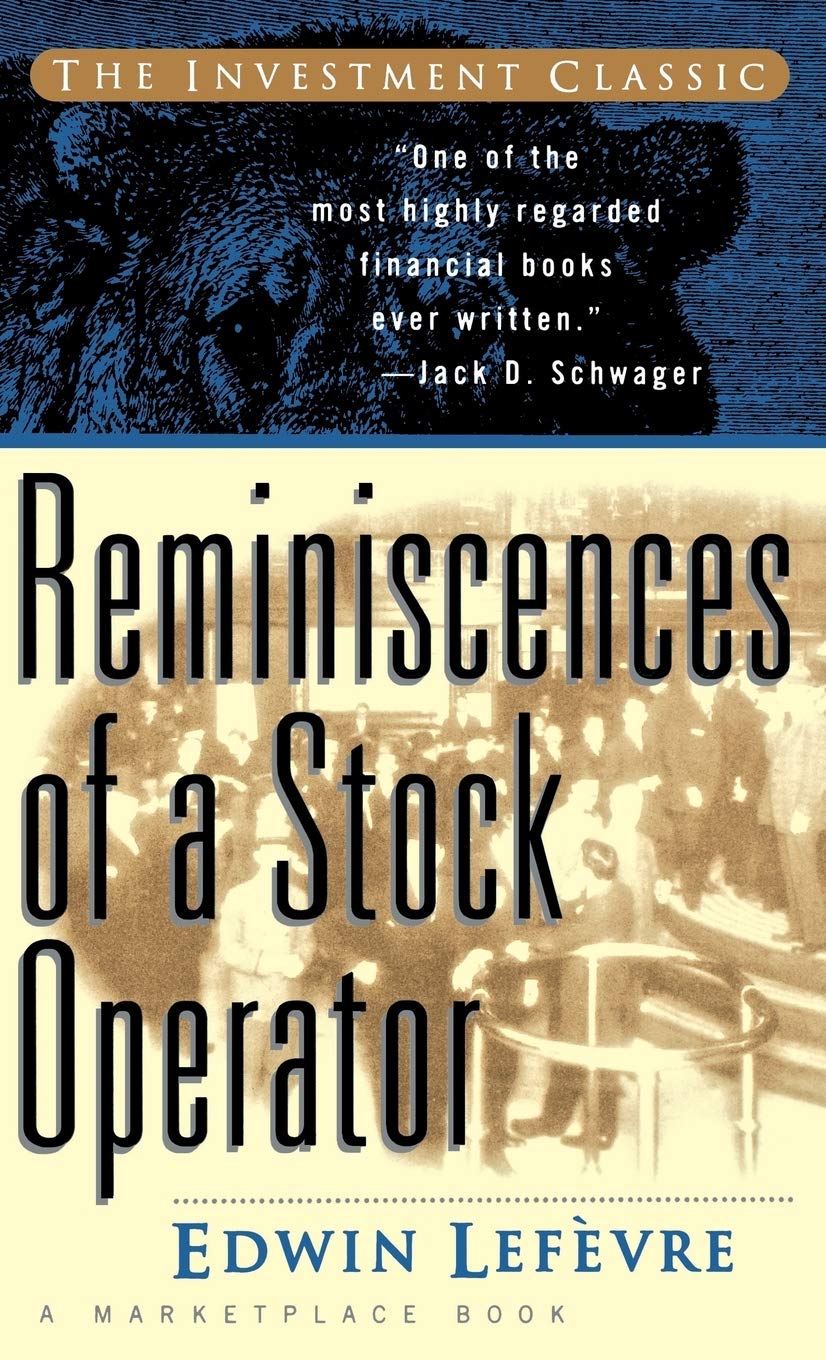
Schwager explains the central mission across all five Market Wizards books: finding what explains why some traders succeed where so many others do not. The answers had to have long-term truth — principles that stayed valid as markets transformed from open-outcry pits to electronic trading, from no computers to supercomputers, from few quants to entire firms of them. His model was Reminiscences of a Stock Operator, written about Jesse Livermore in the 1920s but still resonant when Schwager read it 65 years later. The explanation for why trading wisdom stays relevant across such radically different market structures is simple: what does not change is human nature.
How Schwager found the unknown traders — emails, FundSeeder, and Twitter
For Unknown Market Wizards, Schwager focused on solo traders nobody had heard of. One of the book's most extraordinary subjects — a trader who turned $5,000 into $250 million — emailed him out of the blue years earlier; Schwager filed it, started the book, contacted him, and received verified monthly brokerage statements going back nearly twenty years. Others came through FundSeeder, a trading analytics platform that surfaced traders with exceptional risk-adjusted returns, or via Twitter callouts. Peter Brandt, a close personal friend, was included specifically so his market wisdom could be preserved for posterity.
Personal connections, Jim Rogers, and why every subject got to review the draft
The first Market Wizards book relied entirely on personal connections — Michael Marcus and Bruce Kovner were colleagues from Commodities Corporation, and Jim Rogers was already a known figure. Schwager contrasts this with the later books where he had to build trust with complete strangers. A universal technique across all books: offering every subject the right to review the final draft before publication. This assurance was not just helpful in getting the interview — it was critical in getting people to speak openly. When subjects know they can correct anything they regret saying, they drop their guard and the real conversation happens.
Why Schwager abandoned fundamentals — technical analysis is naturally compatible with risk management
Schwager worked exclusively as a fundamental analyst until he noticed that his colleague Steve Kroll, the one technical analyst in the group, was more right than wrong more consistently than anyone else. That forced him to take it seriously. The deeper insight: fundamental analysis is structurally incompatible with risk management. If you're bullish on wheat at $5 and it drops to $4.50 with fundamentals unchanged, the rational fundamental response is to buy more — exactly the opposite of what risk management requires. Technical analysis solves this cleanly: if price goes against your analysis, the analysis is by definition wrong, giving you a natural, unambiguous stopping point regardless of whether you trade with the trend or against it.
Tom Baldwin on St. Patrick's Day — the hardest interview of Schwager's career
Schwager describes the challenges of interviewing traders who gave him minimal time — Richard Dennis and Ray Dalio each gave him only one hour, twice. His most intense experience was Tom Baldwin, a pit trader executing Morgan Stanley-sized bond volume for his own account, interviewed on St. Patrick's Day in Chicago when everyone was heading to the bars. Schwager felt like 'a photographer trying to get a picture of a rare bird about to fly away.' He had to have the next question ready before Baldwin finished answering. The lesson: adapt your interview approach to the subject — some need you to slow down, others need you to keep up at their speed.
The Gary Bielfeldt discovery — finding a bond trading legend through wire service mentions
Schwager tells the story of discovering Gary Bielfeldt (BLH), a bond trader working from Peoria, Illinois, who was so unknown that Schwager first learned of him through wire service mentions of unusually large trades. When Schwager cold-called him, Bielfeldt's phone interview was painfully sparse — short answers, no elaboration. But the story of how Schwager found him — noticing a pattern of massive bond trades from an address nobody recognized — illustrates the reporter's instinct that drove the series: follow the data trail, and sometimes you find a wizard hiding in plain sight.
Trading vs gambling — why an edge is everything
Schwager draws a clean line between gambling and trading. Gambling structurally puts the odds against you — the house always has the edge. Successful trading is the opposite, but only if the edge is real, definable, and understood. He cites Bob Dylan's line 'you can't win with a losing hand' as the clearest expression: you must know what gives you your edge or you are gambling regardless of what you call it. Without a specific, articulable reason why your approach can overcome the market's built-in edge against you — commissions, slippage, information asymmetry — you cannot win over time.
You have to love the game — the one trait every Market Wizard shares
Beyond having a genuine edge, nearly every wizard Schwager interviewed shared one trait: they genuinely loved trading as a puzzle or game — not for the money, but for the intellectual challenge. Bruce Kovner called it three-dimensional chess; Jim Rogers described it as a puzzle where pieces are constantly being swapped out. The trader who turned $5,000 into $250 million got into markets for the wrong reason — money — but discovered he loved the process of spotting trends, and that love is what made him great. The last line of the original Market Wizards captures it: you have to love what you're doing.
Can anyone be a great trader? Schwager says no — innate skill is real
Schwager answers clearly: no. Just as not everyone can be a great athlete or musician, not everyone can be a great trader. Many of the wizards he interviewed had genuine innate market intuition that analytical work simply could not replicate. His clearest example: when Schwager was deeply bullish on cotton based on exhaustive historical research, Michael Marcus said it would go far higher — not because of better data, but because he intuitively understood that China's first year as a cotton buyer was the single variable that mattered. The price went from 25 to 99 cents. Schwager had the analysis; Marcus had the insight.
How important is timing? It depends entirely on your approach
Schwager explains that the importance of entry timing varies dramatically by methodology. A long-term fundamental investor may have a thesis that plays out over years — precise timing at the day or week level matters far less than getting the structural call right. A short-term technical trader, by contrast, lives and dies by timing precision. The key is not to judge one approach by the standards of the other. The right question is not 'how important is timing?' in the abstract — it is 'how important is timing given the specific approach I am trading?'
Stepping on the accelerator — why great traders size up when conviction is highest
Schwager addresses the widespread 1% risk rule and acknowledges it is sound advice for most traders most of the time — but identifies a critical exception documented repeatedly across all five books. When conviction is very high and opportunity is clear, the great traders step on the accelerator. He tells the Druckenmiller story: when Druckenmiller showed Soros a billion-dollar position in the Deutsche mark ahead of German reunification, Soros asked 'you call that a position?' Schwager also describes Soros's Plaza Accord trade — when the yen surged 700 points overnight, Soros stopped traders from taking profits: 'The Fed just told me the yen is going up for a year. Why would I sell it on the first day?'
What intuition really is — subconscious experience, not instinct from nowhere
Schwager offers his most precise definition of trading intuition: it is subconscious experience, not instinct pulled from thin air. When a skilled trader has a hunch, it is triggering pattern recognition from thousands of past market situations they cannot consciously identify — the connection is real even if it is invisible. He references Bill Eckhardt's insight that human emotions lead to worse-than-random results, and explains the contra-emotional signal: for some traders, the feeling of wanting to triple up on a winning position is a reliable indicator that a reversal is imminent. The body reacts to market patterns the conscious mind has not yet processed.
Schwager's personal test of intuition — the Swiss franc trade he almost cancelled
Schwager shares his own experience with trading intuition. He placed a buy order in Swiss francs at a specific price level, and when the market approached his order, he found himself hoping it would not get filled — a visceral signal that his experience was warning him away. Recognizing that his emotional resistance was the exact contra-emotional pattern he had documented in other traders, he forced himself to leave the order on. The trade worked. The lesson: sometimes the most valuable trading signal is noticing when your own emotions are telling you the opposite of what your analysis says — and going with the analysis.
Know your exit before you enter — Bruce Kovner's ten words of trading wisdom
If Schwager could give traders a single piece of advice in ten words, it would be Bruce Kovner's rule: 'Know where you will get out before you get in.' Defining the exit in advance eliminates the single most agonizing moment in trading — standing in a losing position asking yourself whether to stay or go, with every rationalization pulling you toward staying. If you define the risk before you take it, the decision is already made. You do not have to think; you execute. That pre-planned exit point also protects you from the market's ability to turn a small loss into a catastrophic one through hesitation.
Why you can only think clearly before you have a position
The reason Kovner's exit rule works is psychological. The only moment of true objectivity is before you enter a trade. The minute you put a position on, every subsequent piece of information gets filtered through the lens of what you want to happen — you rationalize, you hesitate, you invent reasons to stay. This is not a character flaw; it is how human cognition works. But knowing this in advance lets you design around it. Decide the exit at the moment of pure objectivity, write it down, and trust that decision more than any thought you have once you are in the trade.
25% a month for a decade — the extraordinary return records Schwager has verified
Schwager revisits some of the extraordinary track records he has encountered across five books, including a trader who made roughly 25% per month for nearly a decade — documented and real. He explains why this does not compound to an absurd fortune: short-term traders cannot let accounts grow without moving the market against themselves. Many pull capital out consistently and keep trading size flat — the account value stays in a manageable range while the withdrawals fund their actual lifestyle. The 300%-per-year trader on $50,000 is not a billionaire because they cannot deploy billions the same way they deploy thousands.
Why percentage returns shrink as capital grows — the structural limit of scaling
At larger AUM, percentage returns necessarily compress because the manager becomes a price factor. Schwager uses Bruce Kovner as an example: Kovner averaged 88% per year as an individual trader but could never approach that at $20 billion. The question is not whether a given return is possible — it is at what size it is possible. The trader who prints 300% per year on $50,000 simply cannot replicate it at $5 billion. This is not a failure of skill; it is a structural reality of markets: every strategy has a capacity constraint, and the great traders understand exactly where theirs sits.
Why monthly profit targets destroy trading performance
One observation from Unknown Market Wizards: traders who set monthly profit targets consistently underperform. The reason is mechanical — any approach will have months with abundant opportunity and months with very few. Forcing trades when the market is not offering them is precisely how you destroy a genuine edge. The market does not care about your targets, your bills, or your desire for a smooth equity curve. The traders who succeed are those flexible enough to take what the market gives — aggressive when conditions align, patient and small when they don't.
What changed from the first Market Wizards to the latest — and what did not
When the host asks what changed across the three-decade span of the Market Wizards series, Schwager is definitive: the core findings were essentially unchanged. Electronic trading, computers, quantitative firms, and new markets transformed the infrastructure of trading but not its principles. What made traders great in 1989 — discipline, genuine edge, risk management, love of the game — still makes traders great today. The technology changes how trades are executed; it does not change why some traders win and most lose.
Crypto, tulip bulbs, and South Sea — Schwager on historical market manias
Schwager compares crypto to the dot-com bubble: a handful might survive and thrive, but most will ultimately be worthless — and that does not mean they were not tradable in the interim. NFTs had all the hallmarks of classic mania: speculative frenzy detached from any underlying cash flow or utility. He places these episodes in the long history of market manias — tulip bulbs, the South Sea bubble, internet stocks — where the same pattern repeats: a real innovation attracts genuine capital, then speculative excess overwhelms rational pricing, and the cycle ends with most participants losing most of their money while a few survivors build lasting businesses.
GameStop and why the efficient market hypothesis is wrong
The host asks whether the GameStop episode proves that price is driven by buyers and sellers rather than fundamentals. Schwager goes further: GameStop is his cleanest illustration of why the efficient market hypothesis is wrong. A stock moving from $20 to $500 with no fundamental change, then returning to $20 within months, cannot be reconciled with market rationality. DJT stock trading at billions with negligible revenue is a similar case. Schwager notes a telling signal in the options market: when puts are dramatically more expensive than calls — as they are in DJT — the market itself is signaling the irrationality through the pricing of risk.
Glitch traders, technicians, fundamentalists — why everyone thinks their way is the only way
Schwager describes traders who built edges from glitches — one made hundreds of millions exploiting a pricing discrepancy in a single brokerage platform — as evidence that edges can come from entirely unexpected places. He then addresses the perennial debate between technical and fundamental traders. Each camp tends to dismiss the other: Jim Rogers famously said he never met a rich technician except those who sell their services. But the dismissal works both ways — and both sides have produced fortunes. The conviction that only one approach can work is false, but it is a conviction nearly every successful trader holds.
Trading your personality — why both Rogers and Schwartz were right
Schwager explains why traders have such fierce convictions that only their approach works — and why they are simultaneously right and wrong. Jim Rogers built his wealth on pure fundamental analysis; Bonnie Schwartz spent ten years as a fundamental analyst losing money, then got rich as a technician. Both are right about their own approach; neither is right about dismissing the other's. The conclusion: successful traders ultimately trade their personality. Finding an approach that genuinely fits your temperament — your patience, your risk tolerance, your information processing style — is more important than finding the abstractly 'correct' method.
How trend following's edge eroded — and why popularity eventually kills any approach
Schwager traces trend following from Ed Seykota's era in the late 1960s — when running a simple moving average program on a brokerage firm's mainframe over the weekend was so unusual that the edge was enormous — to today, when every retail trader has access to the same tools and concepts. As trend following became widely known and universally taught, the edge degraded: more practitioners created more fake breakouts and shorter-term counter-trend moves that made staying in trends far harder. The underlying rationale still holds — real supply-demand imbalances take years to resolve, so genuine trends exist — but the return-to-risk ratio has compressed substantially.
Trader routines, the origin of the 'Market Wizard' term, and the WSJ review that sold out overnight
Schwager observes that successful traders rarely matched the lavish social-media image — many were intensely focused professionals with structured routines: Peter Brandt does his chart analysis every Friday without fail; traders in Unknown Market Wizards maintained detailed written reviews of every trade, reviewed monthly. Schwager admits he cannot remember where the term 'Market Wizard' came from — it sounded right and stuck. He also reveals that the first printing of the original Market Wizards sold out overnight after a single Wall Street Journal review — and the publisher took months to reprint, a missed opportunity that still frustrates him.
No more books — and Schwager's parting advice for interviewers and content creators
Schwager says he has no plans for another book — he is retired from writing, and the most recent Market Wizards volume is likely the last. If he ever did another, he jokes he would title it 'The Last Market Wizards.' He closes with advice drawn from a career spanning five decades of conversations with elite traders: think in terms of conversation, not questionnaires — listen to what the other person says and follow the tangents that open up. Strive for excellence in every aspect of whatever you do. And only do it if you genuinely love it, because that passion is what separates the people who endure from those who burn out.