
Mark Minervini
Two-time US Investing Champion who turned $28,000 into $3.5 million in just over four years using his proprietary SEPA methodology — Specific Entry Point Analysis. SEPA integrates fundamental stock screening (accelerating earnings per share, strong sales growth, expanding profit margins) with precise technical entry criteria including VCP (Volatility Contraction Pattern) setups and defined stop-loss levels. Author of 'Trade Like a Stock Market Wizard' and 'Think & Trade Like a Champion,' Minervini has coached thousands of traders through his Master Trader Program and is among the most influential voices in modern active trading. His approach bridges William O'Neill's CANSLIM framework with advanced position sizing and risk management, making it one of the most complete systems available for identifying and trading leading growth stocks. Minervini's consistent championship-level returns across multiple market cycles stand as one of the strongest real-world validations of systematic momentum and growth stock investing.
Intro — a Market Wizard returns to prove his techniques are timeless
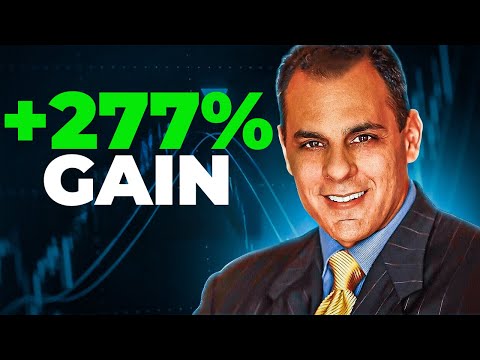
▶ 2mHost Richard Moglen introduces Mark Minervini — author of Trade Like a Stock Market Wizard and Think and Trade Like a Champion, former US Investing Champion, currently leading the money manager division with a 277% return. Mark adds that his book Mindset Secrets for Winning is equally important. Richard asks why Mark rejoined the championship after 24 years. Mark explains: he wanted to show that his techniques are timeless. Everyone warned him not to do it — if you don't win, you'll look bad — but Mark trusted his process and knew he would at minimum deliver a respectable performance.
Adapting without changing — tighter stops, quicker profits, and the preparation mindset
▶ 3m 11sWhen the 2021 market turned choppy and breakouts started failing, Mark didn't change his strategy — he simply assessed what the upside was giving him and tightened his stops and profit targets to match. He can't control the upside but he can control the downside and where he sells. This leads into his core mindset: everything is preparation. His cycle — plan, trade, evaluate, study what went wrong, replan — is something he has maintained for 38 years. Very few traders do consistent post-analysis; Mark still evaluates every trade to know the truth about his trading at all times.
Weekend routine — three lists and why the stocks tell you the market's condition
▶ 2m 27sMark does very little general market analysis — 90% of his work is stock screening. He looks at price and volume of the indexes and follows some sentiment indicators, but the stocks are the signal: if many stocks are setting up and working, he is bullish; if setups are sparse or failing, he is bearish or cautious. He creates three lists: a watch list (candidates not yet close), a high-on-deck list (very close), and a buy alert list (ready to be bought). When the next trading day arrives, he has already decided exactly what price to buy and where his stop is — all figured out ahead of time so execution is mechanical, not emotional.
The three fundamentals — earnings, sales, and margins
▶ 1m 58sWhen screening growth stocks, Mark focuses on three things: earnings, sales, and profit margins. There are many ways to slice and dice those numbers — breakout years, acceleration, margin trends — covered in detail in his first book, but the engine behind every growth stock comes down to those three. Revenue growth, profit margins, and the conversion of both into earnings are what drive a growth stock higher.
Morning ritual — beach meditation, visualization, and Navy SEAL box breathing
▶ 2m 53sMark doesn't do it every day, but many mornings he meditates on the beach to enter a calm, balanced state. He does visualization every single day — morning and night — it has become automatic. He practices a box breathing technique used by Navy SEALs under pressure, taught to him by his wife and her friends who do sophisticated breath work. The morning routine also includes mental rehearsal: checking the overnight futures, visualizing how he will handle gap opens (both up and down), and playing through scenarios so that when the market opens, he is prepared rather than reactive.
Keys to triple-digit returns — concentration, leverage, and timing
▶ 2m 26sYou will not get triple-digit returns from a well-diversified, low-turnover portfolio or from following traditional financial advisor advice. Mark uses leverage, takes very large concentrated positions at times, and generates tremendous turnover — all while managing risk just as stringently as he would otherwise. The US Investing Championship is a real-money contest with a million-dollar minimum in Mark's division, so professionals cannot simply gamble on penny stocks to win. The key ingredients: concentration, timing to avoid dead time, and the willingness to press when the setups are there. Mark calls 2021 his second most aggressive trading year ever, after 1995 when he was up over 400%.
How Mark defines risk — the 8% max drawdown and the tradeoff of short-term trading
▶ 2m 33sMark's maximum stop on any individual stock is 8%, so his maximum drawdown from principal is also 8%. When trading leveraged positions, he watches them intraday and pares back quickly if they move against him — the stop on a 4x leveraged position is microscopic compared to a normal-sized one. Once he has profits, he nails them down aggressively. The tradeoff: he very seldom holds for a monster move because he gets clipped out on pullbacks. Going for shorter, more controllable moves allows rapid compounding — he rolls gains from one trade into the next rather than riding through corrections.
Batting average and average gain — the numbers that drive the mathematical equation
▶ 1m 51sMark's batting average ranges between 35% and 65%. When things are going well it is above 50%; when they are not, it is below. He is so process-focused that he often does not know his exact P&L or even what the Dow did at the end of the day. His large leveraged positions skew the statistics — tiny losses or tiny gains on big positions jockeying for entries, larger percentage gains on regular-sized positions held for a move. The point: he trades setups, not P&L targets.
Progressive exposure — start small, ramp fast, and sell into strength
▶ 3m 15sMark never dives fully into the market; he starts with test positions and ramps up quickly as they begin working. This is a key difference between a pro and an amateur: amateurs need too much evidence and by the time they get the green lights, it is often late. When Mark sees the 'whites of the eyes' he moves fast. As stocks rise, he sells into strength — this keeps him at equity peaks, cutting off volatility and drawdowns entirely. By selling at the highest price, there is no downside giveback. The speed of escalation and the discipline of taking profits into strength are what produce low-drawdown, high-return compounding.
Always improve your worst-case scenario — the multi-million dollar sentence
▶ 2m 26sMark's guiding principle: at all times, aim to improve your worst-case scenario. He calls this a multi-million-dollar sentence. Example: buy a stock, it moves up — move the stop to breakeven (worst case just went from -5% to 0%). Stock goes up 16% — sell half, let the rest ride with a stop at breakeven (worst case is now a guaranteed 8% profit on the total position). By focusing on minimizing the downside rather than maximizing the upside, the upside takes care of itself. This year with aggressive sizing, Mark sometimes uses microscopic stops and time stops — if the stock does not move on cue, he is out immediately.
SCHW walkthrough — the base, the reversal recovery, and the entry
▶ 3mMark walks through a recent Schwab (SCHW) purchase to demonstrate his setup in real time. The stock formed a large base, tightened up on the right side, and produced a reversal recovery pattern — a specific setup Mark named where a stock undercuts a prior squat low, reverses, and closes strong. Mark entered at 79.45 as the stock moved through the pivot level, getting about 45 cents of slippage. He monitors a five-minute chart alongside the daily and weekly, but he never trades off intraday charts alone — even his day trades are based on the daily setup. When the stock gaps up but the gap is microscopic relative to the pivot, he does not consider it extended.
Stop as a selection tool — the 5–8% rule and why wider means wrong
▶ 2mThe host asks where Mark places his initial stop when buying right at the open. Mark explains that for a swing trade, the day-one stop may differ from day two. The key principle: if a stock needs more than 5-8% of room, the timing of the entry was not precise enough and the entry point was not tight enough. The stop is not just a risk tool — it is a selection tool. Mark will not enter a stock that requires a wide stop because the volatility means the 'bucking bronco' can knock him out on normal noise. Tight entries from volatility contraction patterns allow tight stops, and tight stops allow larger positions for the same dollar risk.
PYPL, STLD, PAG — more winners, the pop-and-drop, and adding on resets
▶ 5mMark walks through additional trades: PayPal (bought, sold on the bearish engulfing, bought back after the reset), steel stocks like STLD (bought at the pivot, ran 3-5 days, then faded — the 'pop and drop' theme of this market), and PAG — a textbook cup-with-handle that worked beautifully. For SKY, Mark shows the base and discusses adding to positions on a reset. The key lesson: in a choppy post-correction market, holding through pullbacks does not work. You sell into strength after a few days because the pop is all the market is giving, then redeploy into the next setup.
CFLT intraday and the confirmations/violations framework
▶ 2m 53sMark shows CFLT, a stock he bought that day. It broke out, pulled back immediately (an 'early day reversal' and squat), then stabilized and closed strong. Mark watches the first 3-10 days after a breakout for confirmations or violations: confirmations tell you the train is on schedule — hold for a bigger move. Violations are abnormal action signaling you should reduce or exit. These signals are detailed in Think and Trade Like a Champion. The volume, the close, the pattern of higher lows — each day gives you data. On the pivot tightness: Mark likes the right side of the base to be in single-digit percentages, though late-stage market conditions with heavy retail involvement sometimes require cutting a little slack.
Failed breakouts — BURL, ATVI, ZLAB, SNAP and the violations that warned you
▶ 5m 9sMark shows four breakouts that failed and the specific violations that gave early warning. Burlington (BURL): perfect tight base, good breakout, strong volume — but over the first 6 days, only 2 up days and 4 lower lows with rising volume. Activision (ATVI): clean breakout, then day 2 sold off on higher volume — low volume out, high volume in, a classic distribution pattern. ZLAB: tried to buy the pullback, immediately got 4-5 lower lows with closes on the low and zero follow-through. SNAP: Mark originally bought much earlier, sold too early into earnings, tried again, got stopped out on the outside day — then the big earnings collapse that surprised everyone. The thread connecting all four: the violations were visible in the first week of price action well before the major drops.
The four things you control — building a mathematical edge from what you can measure
▶ 1m 58sMark wraps the chart review by emphasizing what actually matters: not batting average or total P&L, but average gain versus average loss. If your average gain is 6% and your batting average is 50%, you need a 3% average loss to maintain a 2:1 reward-to-risk ratio — it is a mathematical equation. You control four things and only four things: what you buy, when you buy, how much you buy, and when you sell. You do not control how much a stock goes up. Your reliance and your assumptions must be based on what you can actually control, backed by your real trading data.
Stocks first — leaders break out before the market confirms
▶ 2m 26sWhen the host asks about increasing exposure after a market correction, Mark cautions against anchoring trading decisions to indexes. The stocks come first. In 1995 — his best year, up over 400% — he did not even start trading until April, well after the market had already moved. In 1990-91, he bought US Surgical and Amgen breaking out around the October lows; the market did not take off until January 15th after the Iraq war started. The leaders were already out of bases months ahead. His thought experiment: if nobody had ever invented an index, we would all trade better — we would focus on individual stocks. A basket of 30 price-weighted stocks (the Dow) does not represent 10,000 stocks.
How Mark increases exposure — pilot buys, expanding watchlists, and the feel factor
▶ 3m 58sMark answers the exposure question directly: he starts with small pilot buys — if his normal position size is 20-25%, he begins at 5-10%. If those work, he bumps to 15-20% or adds more positions, typically reaching 25-50% invested after the first two entries. If everything is working — open profits growing, buy list expanding, new stocks breaking out — he moves quickly to 75-100% invested. But if the same four positions are up yet the buy list is thin and new breakouts are failing, he pauses. There is no purely mechanical black-box rule; there is some feel developed over nearly four decades of trading.
Commit for 5–10 years — trading is harder than brain surgery, treat it accordingly
▶ 2m 36sClosing the interview, Richard asks what advice Mark has for traders aspiring to match his returns. Mark's answer: temper your expectations. Nobody opens a brokerage account and expects to be great in months — but they would never expect to become a trial attorney, a surgeon, or even a McDonald's assistant manager in that time. Trading is harder than those professions. The key is finding a strategy with a proven edge that fits your personality and that you can believe in 100%. Zig Ziglar said the best sale a salesman can make is to sell himself first — you have to believe in what you are doing completely, then do the work and become a specialist.
The specialist's path — one thing well, a 10-year plan, and the master trader program
▶ 2m 25sMark draws the sports analogy: the great champions do one thing exceptionally well. You do not play hockey, basketball, and football at an elite level — you specialize as a center, a guard, or a quarterback. Trading is the same. Make a 10-year plan, not a 10-month one. If you are 30 or 40 years old and can get this down in 5-10 years, it changes your life. Mark mentions his upcoming Master Trader Program — a 7-day, 30+ hour curriculum with a live trading day — available at minervini.com. Richard recommends reading Mark's books multiple times before attending. Mark thanks the audience and Richard closes with a call to like and subscribe.