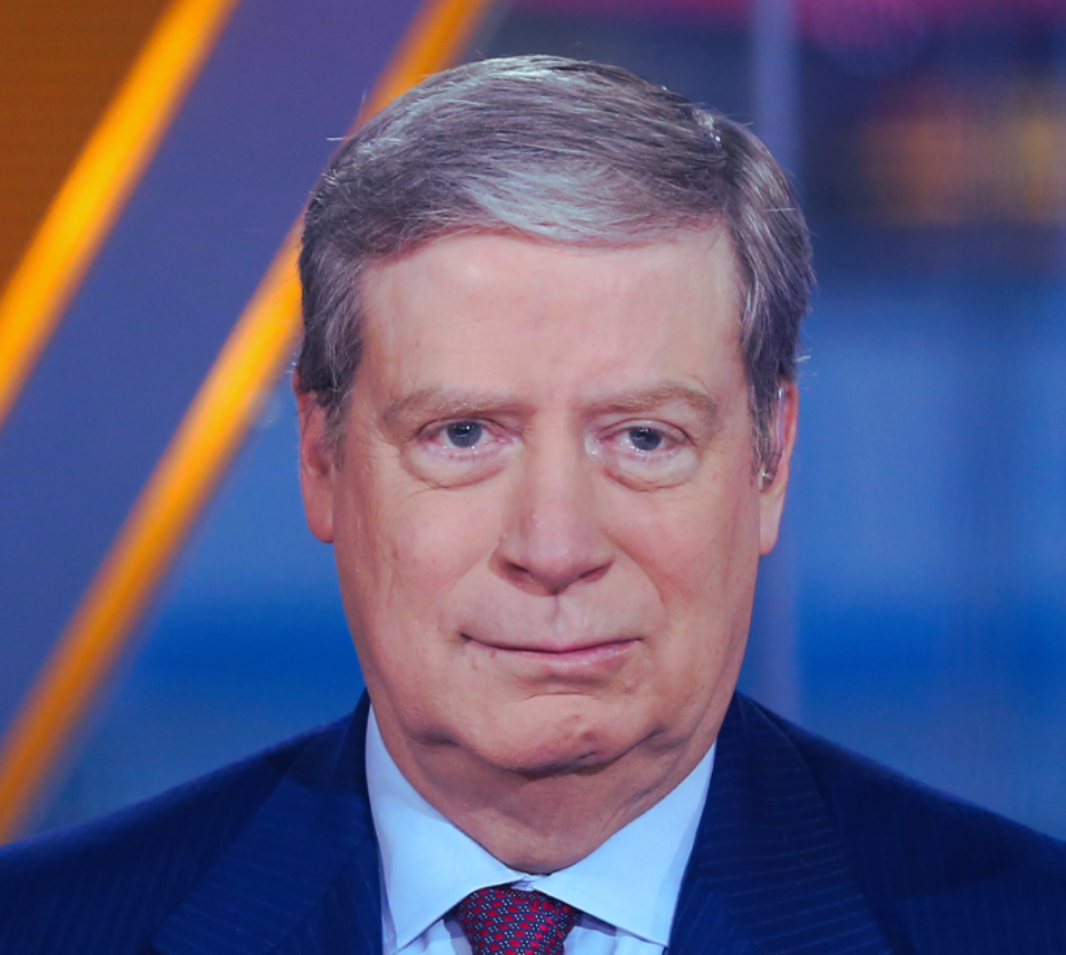
Stan Druckenmiller
One of the greatest macro investors in history, running Duquesne Capital Management from 1981 to 2010 with approximately 30% average annual returns and no losing years across the entire period. As George Soros's chief portfolio manager, Druckenmiller was the architect of the 1992 trade that broke the Bank of England — shorting the British pound for over $1 billion in a single day. His framework combines top-down macroeconomic analysis with bottom-up stock picking, prioritizing liquidity conditions, central bank policy, and earnings momentum to identify high-conviction opportunities across asset classes. Druckenmiller is known for betting big when conviction is highest — concentrating positions in moments of maximum clarity rather than diversifying for its own sake — a philosophy that distinguishes great investors from merely good ones. Now managing his personal family office, he remains one of the most closely followed voices in global macro investing and a foundational figure for anyone studying the intersection of macro and equity markets.
Videos
Stan Druckenmiller — Hard Lessons (Morgan Stanley)
2026-02-27 · 10 bites
Stan Druckenmiller — Macro Outlook (Norges Bank)
2023-04-27 · 6 bites

Stan Druckenmiller — Inside the Mind of a Legendary Investor (NBIM)
2024-11-06 · 17 bites
A Conversation With Stanley Druckenmiller (Bloomberg)
2020-01-06 · 8 bites
"Invest, then investigate" — the Teva trade
▶ 3m 33sDruckenmiller walks through a recent Teva Pharmaceuticals position: a boring generic drug company at 6× earnings, with a new CEO pivoting toward biosimilars and branded drugs. Value investors hated the growth pivot; growth investors wouldn't touch a generic company. Nobody owned it. He saw the inflection before the market did — the stock doubled in six months. The lesson: don't look at what a company is today, look at what it might become and how investors will re-rate it.
"If you look at today, you're not going to make any money. If you try and look ahead and what might change and how investors might perceive something ahead."
My edge is not IQ — it's trigger-pulling
▶ 2m 30sAsked if you need domain expertise to invest in biotech, his answer is an emphatic no — but you need a trusted expert on your team and the skill to read their level of enthusiasm, not just the data they present. He describes his own intelligence as narrow: he is not a brilliant analyst, he is a decisive actor. He filters people, not spreadsheets.
"My advantage is not IQ, it's trigger pulling."
What Soros taught him: the lesson of sizing
▶ 1m 39sHe credits two mentors — an early Pittsburgh boss who taught him craft, and Soros, who taught him the single most important lesson of his career: position sizing. When he joined Soros, he expected to learn about macro. Instead, he learned that being right or wrong matters far less than how much you make when right and how little you lose when wrong. That asymmetry compounds differently than anything else.
"It's not whether you're right or wrong, it's how much you make when you're right and how much you lose when you're wrong."
Building a portfolio from scratch today
▶ 4m 16sAsked to construct a portfolio from zero, he lays out his current macro framework: strong US economy, likely Fed cuts, but historically rich valuations. Against that backdrop: long an eclectic basket of equities, long Japan and Korea, long copper (structural supply deficit plus AI-driven demand), some gold as a geopolitical hedge, and short bonds — not expecting to make money on the short, but using it to hedge the inflation scenario while holding risk assets.
Time horizon: 18 months to 3 years — and using volatility
▶ 1m 23sHe thinks of most trades in terms of 18 months to 3 years, but will exit in 5 days if the facts change. The rise of systematic players and retail-driven volatility hasn't changed his framework — if anything, short-term violence creates better entry points when it goes against a thesis he holds with conviction. The key is using volatility rather than being a victim of it.
Contrarianism is overrated
▶ 44sSoros taught him that the crowd is right 80% of the time — you just can't be caught in the brutal other 20%. He gets intellectual satisfaction from the contrarian 20% but admits that's ego, not edge. He doesn't care if a trade is crowded if the thesis and the trend are right. Extreme conviction plus no believers doesn't make him doubt — it makes him more convicted.
"I think contrarianism is overrated. I do like it when I have extreme conviction and no one else believes it. It gives me even more conviction."
The Nvidia story — and selling too early
▶ 6m 23sHis partner introduced him to AI in early 2022. He bought a small Nvidia position. ChatGPT launched two weeks later — he doubled. A Morgan Stanley call confirmed the thesis — he doubled again. He then publicly said he couldn't see selling for 2–3 years. Then the stock hit $800, up from $150, and he sold — couldn't stand the success. It went to $1,400 five weeks later. He describes this as one of his biggest regrets: he violated his own stated time horizon because of short-term P&L discomfort.
"I couldn't stand success. It had gone from 150 to 800. I was long-term in it. I couldn't deal with it and I sold it."
What he's unlearned: technical analysis and price vs. news
▶ 2m 25sTechnical analysis was roughly 5× more effective 30–40 years ago simply because so few people used it. Now that everyone does, the edge is gone. Same with the "bad earnings, stock holds up" signal — once widely taught, it stopped working. He calls both strategies "loved to death". He hasn't abandoned them but no longer relies on them the way he once did. The lesson: an edge exists only as long as it remains non-consensus.
More wisdom, less courage — the chickening out problem
▶ 2m 3sDespite having more pattern recognition and tools than ever, he admits he was a better portfolio manager in his 30s and 40s because he had the courage to size into conviction. Wisdom and capital accumulate; willingness to act on them can quietly erode. He is actively trying to regain that nerve — not for performance, but because the game is more fun when you play it fully.
Imposter syndrome for 15 years — and moving on
▶ 2m 25sDespite his track record, he doubted himself as a random accident for more than 15 years. He still gets emotional in drawdowns and still makes the same types of mistakes. The hard-won lesson: at some point the record is long enough and consistent enough that you have to accept it is not luck, stop torturing yourself for 48 hours after every mistake, and move on. The gift is real — the job is to stop fighting it.
"You've been doing this long enough and the record is there long enough that it's no longer like a random accident."
The most uncertain environment in 45 years
▶ 4m 10sDruckenmiller explains why this is the most uncertain macro environment he has encountered in his 45-year career: 11 years of free money created a broad asset bubble, followed by a 500-basis-point rate hike in 12 months — a sequence with no historical parallel. He is in the hard landing camp but will not bet big because bonds are not screaming bargains with the 10-year at 3.5% and the Fed at 5.25%. The response to Silicon Valley Bank — erasing five to six months of balance sheet reduction in four days — shook his faith that the Fed would hold the line in a hard landing, noting that historically Jerome Powell is not a profile in courage.
"I’ve been doing this for 45 years. I’ve studied a lot of economic history, but I’ve never had a situation where you had free money for 11 years, a very broad asset bubble, followed by jacking up rates 500 basis points in 12 months."
Equities, dollar, and gold — where the risk is
▶ 4m 15sIf forced to pick a direction on equities, Druckenmiller would short economically sensitive stocks like the Russell 2000 — but AI makes things complicated: NVIDIA could rise even in a recession given the AI arms race, just as oil and chemicals went up in 1973–74. The one area he feels reasonably comfortable: long the US dollar, since currency trends run two to three years and he expects less tightening from the US going forward relative to other countries, especially after the weaponisation of the dollar. He is also long gold for the same structural reasons. His overall posture: equities roughly 3% net short, fixed income minimal except Japanese government bonds where the risk-reward is “ridiculous.” His P&L barely moves 30 to 40 basis points a day.
The math of never losing money
▶ 1m 59sTangen asks about Druckenmiller’s emphasis on not losing money. It is just mathematics: down 50% requires up 100% to get back to even. His audited track record — a little over 30% net per year for 30 years — was achieved not by making 20–30% every year, but by keeping bad years at zero to 5% and then throwing in a few 50s and 60s. The principle: when you really see the ball, swing really big; when you do not see the ball, do not swing. This compounding math is the central insight behind his entire approach to risk and is what separates great long-term track records from merely good ones.
"If you go down 50, you got to go back 100 to get it back to even. The way to build a long-term track record is when you really see the ball, swing really big — and when you don’t see the ball, don’t swing."
Invest then investigate — pattern recognition and technical discipline
▶ 3m 2sAsked how much is analysis versus gut feel, Druckenmiller responds: “with analysis comes paralysis.” He cites Soros’s mantra — invest, then investigate. In a fast-moving world, if he gets an idea he thinks is attractive, he buys first and has his analysts back into it. If they prove him wrong, he gets out. He started in the 1970s with a chartist mentor and still uses technical analysis for two purposes: rate-of-change data tends to lead and helps find things others are not looking at, and charts provide a discipline check on falling in love with a thesis. His mentor’s framework: out of 6,000 stocks, you can always find 20 with both a good chart and a good fundamental story — if either one does not fit, do not do it. Being stubborn but agile is the hallmark of a great investor.
"With analysis comes paralysis. Soros used to say invest and then investigate. If I get an idea and I think it’s attractive, I generally go ahead and buy it and then tell the analysts to back into it. If it turns out I was wrong after they analyze it, I get out."
Questioning your beliefs — and why price action has degraded
▶ 2m 30sHow does Druckenmiller question his own beliefs? Price action is his primary check — if his thesis is bullish but the stock is not moving, he re-examines the thesis repeatedly. He also surrounds himself with young people unafraid to argue with him: if someone has been around too long and agrees with everything he says, they are not around much longer. But he acknowledges that price action versus news is not the reliable signal it was 20 to 30 years ago, when a stock that opened down 10% on bad earnings and closed up was almost guaranteed to be higher in three months. Algorithmic traders, factor investors, and active hedge funds have all learned the same tricks and degraded the signal. He adapts rather than complaining — it is just a new world.
"If I’ve got a thesis and it’s really bullish and it’s playing out and the stock’s not going anywhere, makes me go back and check the thesis over and over."
Be patient for the fat pitch
▶ 2m 1sAsked how to make money in the next two years, Druckenmiller offers a structural view: markets may not be higher in 10 years — like the 1968 to 1982 period — but there will be massive swings within that. Rough roads are ahead, and when the central bank responds in “some crazy way,” it will create opportunities like 1970–72 or 1976–78 where you can make a lot of money. Currency markets are particularly interesting. The key discipline: do not dig yourself into a hole now when conviction is low, because the opportunities will be amazing as this movie unfolds over the next year in macro and equities.
"The way to make money the next two years in the equity space is to be patient. I do think we have possibly some rough roads ahead and I do think the central bank will respond in some crazy way that will give you a period like ’70 to ’72 where you can make money."
Companies Over Macro
▶ 1m 22sDruckenmiller explains he builds his macro view from the bottom up by listening to companies rather than top-down economic data. Corporate America is showing no material signs of weakness — housing is softening but from elevated levels. The bottom-up information isn't indicating an economic problem in the next three to six months.
"I'm known as a macro investor but I do macro from the bottom up — we're listening primarily to companies and we're not seeing any material signs of weakness."
Inflation & the 1970s Double Wave
▶ 4m 11sDruckenmiller pivots to his bigger concern: inflation, not recession. He draws the parallel to the 1970s — after the first OPEC shock, inflation subsided temporarily then roared back higher. Money supply growth, animal spirits returning, deregulation euphoria, tariffs, and immigration constraints all point to renewed inflation risk. He criticizes the Fed's 50bp cut into full employment with gold at new highs — they're obsessed with nailing the soft landing and protecting Powell's legacy rather than avoiding the big mistake of letting inflation reignite.
"I've switched to being more worried about inflation going forward than the economy itself. If we go back to the 70s, there was an episode with OPEC that set off an inflation — you had a recession and inflation came down, and then went back up again."
The Forward Guidance Trap
▶ 2m 26sDruckenmiller argues forward guidance is a huge problem — it makes the Fed 'forward-guidance dependent, not data dependent' and eliminates their optionality. The Fed believes changing their mind means losing credibility, which ties their hands. His contrasting philosophy: being wrong is acceptable if you change your mind quickly. His track record comes from correcting mistakes fast, not from always being right. On US debt, running 7% deficits at full employment is unsustainable — 'how do you go bankrupt? Slowly, then suddenly.'
"Forward guidance seems to tie them into positions and eliminate the flexibility they need. I'm wrong all the time — I think my record is mainly because when I'm wrong I change my mind, not that I'm always right."
Financial Conditions & the Narrow Market
▶ 2m 36sDespite the Fed supposedly tightening, financial conditions are actually easing into a market melt-up — if inflation turns back up and they need to hike again, it would be devastating. The stock market's leadership is very narrow, concentrated in a small number of stocks. Druckenmiller reads this as a yellow caution light, not yet red — leadership is less narrow than last April, financials are improving, but it's a necessary condition for a bear market that's being satisfied.
"The leadership is very narrow, it's led by not so many stocks. It's never been great, but the leadership's not as narrow as it was last April. It's a yellow light, it's not a red light."
How I Spotted AI Before ChatGPT
▶ 3m 42sDruckenmiller noticed the AI trend years before ChatGPT when his young analysts reported that Stanford and MIT engineers were shifting from crypto to AI. He bought a significant Nvidia position at $150 before ChatGPT launched — calling the timing 'total luck.' Once invested, he systematically worked through the entire supply chain: power, uranium, and other downstream beneficiaries. Now he's cautious: the AI investment phase resembles the internet in 2000 — the secular trend is real, but knowing exactly where to be positioned is hard, and a correction could create better entry points.
"We noticed about three or four years ago that the kids that go to Stanford and MIT — the engineers were shifting from crypto to AI. That was the first sign. I bought a pretty good chunk of Nvidia and then like a month later ChatGPT happened. It was just total luck."
The GLP-1 Trade: Why It Was Easy
▶ 1m 42sTangen notes Druckenmiller was also early into anti-obesity drug makers. Druckenmiller calls this one easy — Americans want to lose weight without doing any work. When he learned patients regain the weight after stopping the drug, he knew the market would be enormous. Both AI and GLP-1 are 2-to-4-year secular themes. He's now looking for AI applications in cancer that haven't been recognized yet, noting his long tenure on the board of Memorial Sloan Kettering, the world's leading cancer hospital.
"If you know the American psyche — they got a way to lose weight without doing any work. I knew the drug worked early on, and then when I heard if you get off the drug you gain the weight back, we realized this is going to be a huge market."
Buy First, Analyze Later
▶ 2m 15sTangen brings up the concept from their last meeting. Druckenmiller explains Soros called it 'invest, then investigate.' Markets are smart, fast, and getting faster — if you wait two or three months to complete analysis on a compelling concept, you may miss most of the move and then be psychologically paralyzed from entering at all. Nvidia was a classic example: he bought a starter position knowing relatively little, and only dug deeper after he was in. The key is acting on a thesis immediately with a small position, then doing the deep work.
"Soros used to call it invest and then investigate. If I hear a concept and I like it, if I wait and spend two or three months analyzing it, I may miss a big part of the move and then psychologically be paralyzed."
Never Invest in the Present
▶ 3m 20sDruckenmiller's core framework: always envision what the world looks like 18 to 24 months out, then see if security prices reflect that future. He explains he was promoted too early in his career and had to develop pattern recognition and intuition rather than deep analytical skills. Example: in a cyclical industry where every company is shutting capacity and losing money, it doesn't take a genius to see that in 18 months, with no new supply, they'll be profitable again. The edge is acting on that foresight before it's priced in.
"I have found it's very important never to invest in the present — always try and envision the situation as you see it in 18 to 24 months, and then see if security prices would reflect that."
Technical Analysis for Position Management
▶ 3m 55sTangen asks if Druckenmiller generally sells early. He explains he's a technician who usually waits for tops before selling — Nvidia had no top, he just thought a $2 trillion market cap was excessive for a cyclical semiconductor company. He defines a top: the rate of change flattens and the stock consolidates. The challenge is that the same consolidation pattern can be a bull flag continuing higher or a true top reversing lower — you have to form an opinion and act. Crucially, he's willing to buy something back higher than he sold it; he's not emotional about prices.
"I'm a technician so I usually wait for tops. A top is something where the rate of change of it going up changes and it tends to flatten out for quite some time. The trick is, in the technical world that could end up being a bull flag or it could be a top."
Cutting Losers Without Emotion
▶ 2m 31sTangen asks what's the key to selling losers quickly. Druckenmiller's rule: if the reason he bought a stock is no longer valid, he doesn't care what he paid for it. If the market has discovered a problem before him and the stock is down, he has no emotion whatsoever — he just gets out. Soros reinforced this discipline. He admits he always measures from the top, finding reasons to hit himself in the head, but never lets that prevent him from taking the loss and moving on.
"If the reason I bought a stock is no longer the case, I don't care what I paid for it. If I bought it at 60 and it's 50 because the market's discovered the problem before me, I have no emotion whatsoever."
Concentration & Multi-Asset Flexibility
▶ 1m 53sDruckenmiller credits concentration as a major reason for his success — not being afraid to bet big. The other key is willingness to move across asset classes: equities, bonds, currencies, and commodities. If you're going to concentrate, it's far better to have five buckets to choose from than to be forced into one. His career evolved from equities-only to multi-asset, and the best risk-reward opportunities in bonds and currencies tend to appear during bear markets in equities — giving him a natural hedge and keeping him from forcing trades in areas without conviction.
"Concentration — not to be afraid of concentration — that's a big reason for my success. And probably the other big reason was being willing to go into other asset categories. If you're going to concentrate, it's better to have five buckets to play in than to play in one."
Inside the British Pound Trade
▶ 5m 7sTangen asks for the best illustration of conviction sizing. Druckenmiller delivers the definitive behind-the-scenes account of his most famous trade: partner Scott Bessent called from London warning that the UK housing market and economy were collapsing. Druckenmiller realized the pound was pegged to the Deutsche Mark while the two economies had radically diverged — Germany booming and needing higher rates, Britain slumping and needing lower rates. These currencies shouldn't have been linked at the same rate. He built the short aggressively, and Soros wanted the position even bigger — $15 billion. When the peg broke, Druckenmiller sold into it overnight as other hedge funds piled in, and the position became a historic winner.
"I called and asked how much it would cost me to short the pound versus the Deutsche Mark. This one economy is booming and they need higher rates, this other economy is falling apart and they need lower rates — these two currencies shouldn't be linked."
Soros, Sizing & the Concentric Circles
▶ 3m 53sAfter the pound broke, Druckenmiller executed the concentric circles approach: short sterling, long gilts, long British stocks — the currency depreciation was good for exports so everything moved in sequence. This is how he trades: get a theme, then map the dominoes that fall because of that theme. The key lesson from Soros: when conviction is highest, the position can never be big enough, especially in liquid markets. In baseball terms, Druckenmiller had a very high batting average, but Soros had a much higher slugging percentage — the size of your wins matters more than how often you're right.
"In baseball terms, I had a very high batting average. He had a much higher slugging percentage. What I learned from Soros is when you have conviction, you should bet really big. It's not whether you're right or wrong, it's how much you make when you're right and how much you lose when you're wrong."
Regret Trades & Human vs Machine
▶ 2m 4sDruckenmiller's biggest regret: predicting inflation correctly in early 2021, writing a Wall Street Journal op-ed, and shorting bonds at 15 basis points — but taking profits at 150bp when they eventually went to 500bp. He held the right thesis but failed to let it play out fully. On AI replacing human investors: pure machines can make money through disciplined process and math, but the best investor in the world will be an intuitive human using AI as a copilot — just as Garry Kasparov pioneered using machines to train and augment his chess.
"I had a mass of short in two-year notes — they were 15 basis points and I was so mesmerized by where they'd been that I took most of them off at 150 basis points. It seemed like a great win, but they went to 500. I regret deeply not holding that position."
The 2000 Bubble: FOMO at the Exact Top
▶ 3m 16sTangen asks about the 2000 sabbatical. Druckenmiller recounts his most emotional mistake. Spring 1999: shorted internet stocks and lost $600 million in weeks. He pivoted, realized Greenspan was easing despite a strong economy with the internet boom behind it, hired young tech managers, and finished 1999 strong. Sold everything in January 2000 — the right call. But watching the market roar higher into March, FOMO became unbearable. He bought everything back and missed the top by about an hour. Quantum dropped from +14% to +1% in a single week, and he knew he was dead.
"I buy everything back — I think I missed the top by about an hour. So I buy back all these tech stocks and within a week I know I'm dead and Quantum goes from like up 14% to up 1% in a week."
Quitting, Redemption & Staying in the Game
▶ 5m 48sAfter the FOMO disaster, Druckenmiller went to Soros and told him two things: he was getting out of everything, and he was quitting. He liquidated the portfolio as the NASDAQ began its -90% move. Four months away gave him a clean slate and a clear head — when he came back and looked at fresh evidence, he had the best quarter of his career. To this day he believes he never would have made that trade if he'd stayed in the grind. Now managing his own money, he still wakes at 4 AM, checks Bloomberg 15+ times a day, and skims 10-Ks at 3 AM. The passion for the game never left — he expects to do this until he dies.
"It was the fact that I had been away for four months, had a clean slate, had a clear head, and just looked at the new evidence. So it was a very, very horrible beginning and a very lucky ending."
Advice for Young Investors
▶ 1m 56sTangen's final question draws advice for the 10,000 young people watching. Druckenmiller: if you're in it for the money, go elsewhere — you can't outwork people who genuinely love the game and losing is miserable if you don't have passion for it. Skip the MBA and find a mentor instead; relentlessly pursue them until they take you in. Be honest about your strengths: being a great analyst doesn't mean you're built to be a portfolio manager. He's seen lives ruined by people who weren't wired for pulling the trigger.
"If they're going in it for the money, they should go elsewhere. There's too many people in the business like me that just love the game. If I was a young person I would not get an MBA, I'd go find a mentor. I've seen it ruin people's lives who weren't built for trigger pulling."
Market Outlook: All Systems Go
▶ 2m 56sErik Schatzker opens by asking how Druckenmiller feels going into 2020. Druckenmiller is unequivocally constructive: low unemployment in the US, fiscal stimulus in Japan and Britain, green stimulus coming in Europe, and negative real rates everywhere. Expansions don't die of old age — they end with tight monetary policy or credit problems, and neither is present. The intermediate-term technicals are good, breadth is at all-time highs, the economy is fine, and the global trade war is de-escalating rather than escalating. For now, all systems go.
"With that kind of unprecedented monetary stimulus relative to the circumstances, it's hard to have anything but a constructive view on the markets and the economy intermediate-term. For now, all systems go."
Inside the Portfolio: Copper, Currencies & Cyclicals
▶ 2m 34sSchatzker asks for specifics on how Druckenmiller is expressing his constructive view. He's long equities, long copper, long commodity currencies (Canadian, Australian, New Zealand dollars, and Mexican peso), and short the long end of the bond market — all bets on a benign economic outlook. Copper gets a special kicker from EV-driven demand growth of 0.5% per year with challenged supply. On the equity side, his portfolio has rotated dramatically from cloud growth stocks (ServiceNow, Microsoft) to companies that benefit from higher nominal growth — banks, financials, and Japanese equities. He's no longer concentrated in low-growth-world winners.
"My mix has changed dramatically to stuff that will do well in a higher nominal growth world. I have banks, financials, I own Japanese. It looks more like a normal mix — not just concentrated into companies that would do well in a low nominal growth world."
The UK Bet: Why Britain Is a Bargain
▶ 2m 18sSchatzker pivots to Druckenmiller's favorite currency: the British pound. Druckenmiller was long sterling heading into the 2019 UK election, believing the British people would reject socialism — his friend referred to Margaret Thatcher as proof that British common sense prevails. He breaks from consensus on Brexit, calling it positive for Britain: the country thrived for 500 years without the European Union. Boris Johnson is 'a smarter version of Trump without the antics.' The UK offers 12x earnings with a 4% yield, lower debt-to-GDP than the US, and a 2% deficit — a far more attractive package than the US on paper. He also owns British financials — Barclays and Lloyds.
"If I were to tell you there was a Republican president but a better version, and you had two-thirds majorities in both houses, a deficit to GDP of two not four and a half, debt to GDP lower than the US, and twelve times earnings in a four percent yield — it sounds like a decent place to invest to me."
Why I've Become a Coward
▶ 2m 32sDruckenmiller admits he's become 'a coward' since he stopped managing outside capital. In 2019 — an extraordinary year for investors — he only made low double digits. He was well-positioned but executed timidly. The reasons: managing his own money feels different than competing with other people's capital; the competitive compulsion to take risk has faded; and perhaps most importantly, the Trump administration's unpredictability — 'wondering where the hell the next bomb is coming from' — makes it impossible to size positions with the conviction he historically deployed. He calls the phenomenon 'policy uncertainty,' and says it's kept him from taking the kind of one-way bets that defined his career.
"I don't take big positions anymore. I've become a coward since I stopped competing. This administration — wondering where the hell the next bomb is coming from — just doesn't allow me to take some of the positions I've taken historically where I just thought it was a one-way bet."
The Fed's Dangerous Easing
▶ 4m 26sDruckenmiller launches into a sharp critique of Fed policy. Jerome Powell won't have the courage to raise rates in 2020, but rates at 1.5% are absurd given full employment and nominal growth — he'd guess the appropriate rate is 3.5%. He's expressing this view by shorting the long end of the Treasury curve. The pattern repeats: Bernanke declared victory with the Great Moderation in 2004, Greenspan was called the Maestro — then the financial crisis happened because of bubbles created by easy money. Negative rates, which Trump has been pushing, are 'the most anti-capitalist idea I could ever dream up.' He grades Powell as a weaker version of Yellen — lacking Bernanke's conviction and ability to control the room. His true hero remains Paul Volcker, who had real courage.
"If I came down from Mars and you showed me the broad landscape and asked what Fed Funds would be, I probably would guess three and a half. I will go to my grave believing that that financial crisis happened because of bubbles created by easy money."
Wrong Call, Right Pivot
▶ 1m 6sSchatzker holds Druckenmiller accountable for his prediction a year earlier that markets were in a global bear market, not just a correction. Druckenmiller admits he was 'absolutely wrong' — stocks are at new highs twelve months later. But he's proud he pivoted before it was too late. He notes the US was the only market that continued rallying until recently. The key question now: how long can this last? Nobody knows — maybe Jim Simons' machine knows, but mere mortals don't. Predicting turnarounds is awfully hard, even for someone who's made more money in bear markets than bull markets.
"Absolutely the wrong diagnosis. Here we are at new highs twelve months later. I'm proud of the fact that I pivoted before it was too late, but I couldn't have been more wrong."
Three Triggers for the Next Bear Market
▶ 2m 16sSchatzker asks what will trigger the next downturn. Druckenmiller identifies three scenarios. First, political: if an anti-capitalist wins the White House, that would definitely trigger a bear market — the question is whether it permanently ends the bull market. Second, monetary: if inflation picks up enough by year-end that the Fed is forced to tighten. Third, a credit event: with interest costs so low, there are 'a lot of bad apples out there that are not being exposed' — including the US government itself, running a trillion-dollar deficit simply because it can. The new academic consensus that deficits are a free lunch is, in his view, dangerously naive.
"If there's a political event — change of leadership in the White House that goes to some of the anti-capitalists — that would definitely trigger a bear market. The other thing is if we started to get enough inflation that the Fed starts tightening. And then a credit event — there's a lot of bad apples out there not being exposed because interest costs are so low."
The Capitalist's Defense
▶ 5m 46sSchatzker asks whether an Elizabeth Warren presidency would really be that bad. Druckenmiller says it would be great for his business — his fund has a negative correlation to the S&P 500 and thrives in bear markets — but not good for America. He then delivers a data-driven defense of capitalism. Poverty in the US has fallen from 26% decades ago to 13% today — an all-time low. After accounting for government transfers, the bottom quintile has seen the same percentage income gains as the top quintile. The anti-capitalist narrative doesn't match the facts. Both parties are undermining markets: Trump's tariff regime is effectively a Politburo picking winners and losers, while negative rates globally have destroyed the hurdle rate that lets markets allocate capital properly. Taking from billionaires doesn't give to the poor — 'that's not the way it works. It's not a zero-sum game.'
"I think we need more capitalism, not less. When you have a president who puts hundreds of billions in tariffs and then picks and chooses individual economic actors who pay and who don't — it might as well be the Politburo. That's like Trump's trade thing — a zero-sum game. If China loses we win. No — you can both lose."