Howard Marks — Investment Philosophy & Risk (Norges Bank)
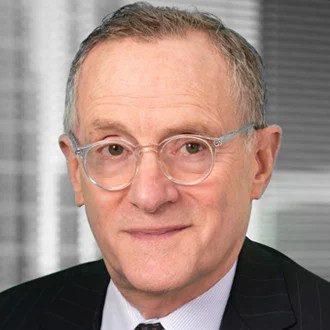
Interview by Nicolai Tangen
In Good Company is a podcast by Norges Bank Investment Management, hosted by CEO Nicolai Tangen. The show features in-depth conversations with the leaders of some of the world’s largest companies and most respected investors, exploring their leadership principles, investment philosophies, and how they engage with one of the world’s largest sovereign wealth funds.
Howard Marks lays out his complete investment philosophy in a wide-ranging conversation covering risk control, market cycles, the limits of forecasting, probabilistic thinking, and the contrarian temperament required to be an exceptional investor. He explains his six core Oaktree principles, why avoiding losers matters more than picking winners, why you can only forecast at extremes — which happen roughly once a decade — and why the personality needed to bet against consensus is fundamentally that of a loner.
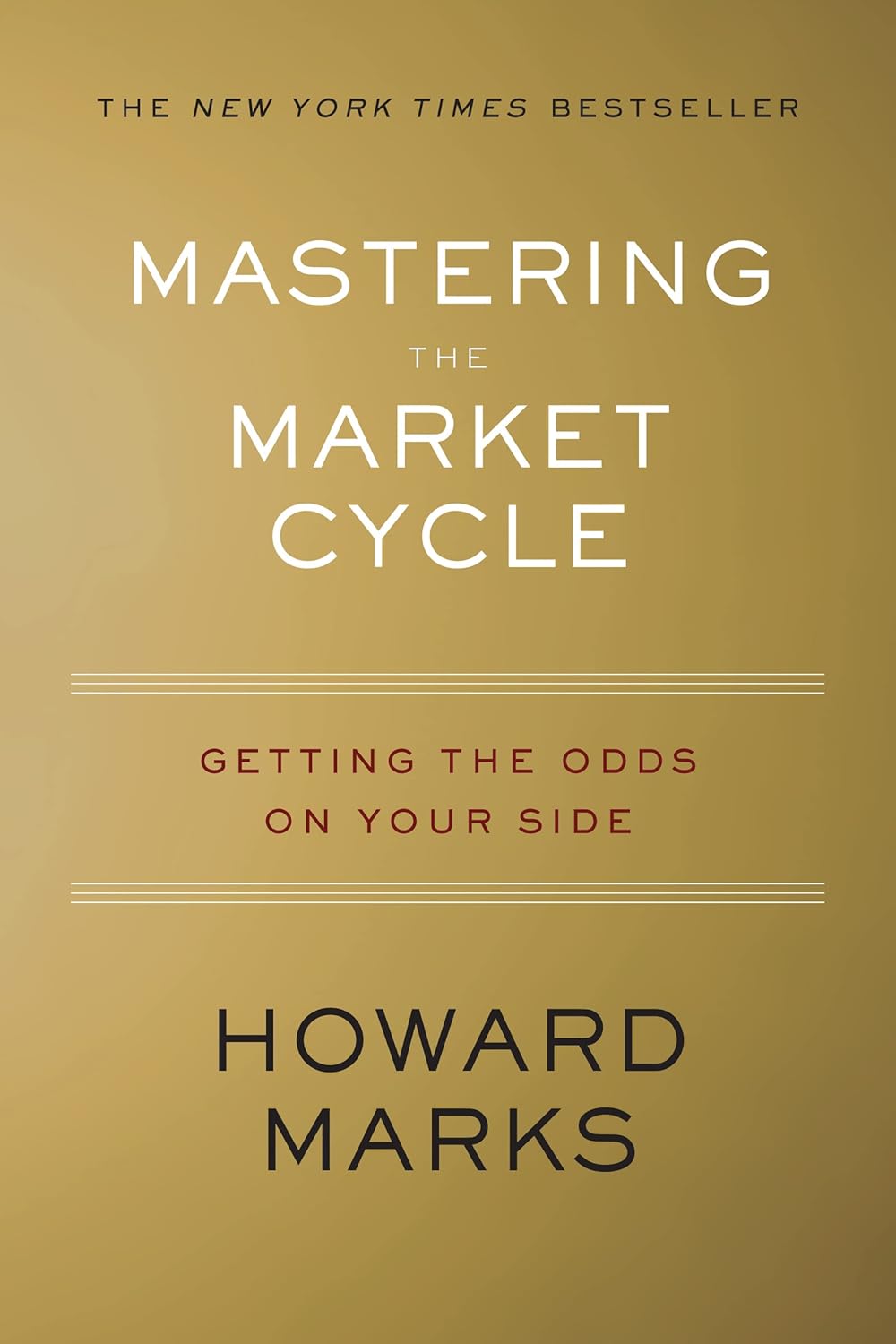
Books Mentioned
How he discovered finance through accounting
A single accounting course in a crowded New York public school was all it took — the symmetry of debits and credits clicked with his left-brained, logical mind. He went to Wharton intending to become an accountant, was introduced to finance as a far more interesting field, and switched. The accounting foundation gave him a framework for thinking about business that shaped his entire career.
The six tenets of Oaktree’s investment philosophy
Marks lays out the six principles that govern every Oaktree investment decision: risk control as job one, consistency over boom-and-bust returns, targeting only the less efficient markets, deep specialization (knowing more than everybody else about a few things), no reliance on macro forecasting to drive investments, and no expectation from market timing. The framework is built around a single insight — it is easy to make money in the good years, but the real skill is making money with risk under control so that in the bad years you don’t give it all back.
Why macro forecasters don’t present a track record
His adherence to the six tenets has grown stronger over 50 years because the longer he lives, the more deeply he understands the limits of human knowledge. Macro forecasters and economists are not right consistently enough to follow — and he points out that no economist ever presents a track record, because if they did they wouldn’t be hired. An old Wall Street joke: an economist is a portfolio manager who never marks the market. Active investors would never hire someone without looking at their record, but economists don’t have to show one.
Randomness, luck, and what age teaches about patience
Randomness governs everything in markets because markets are made of people, and people have feelings — Feynman observed that physics would be much harder if electrons had emotions. The most important lesson from his first Wharton textbook: you cannot judge the quality of a decision from its outcome. The ingredients of success are aggressiveness, timing, and skill — and if you have enough aggressiveness at the right time, you don’t need much skill, which is why stupid people sometimes get rich. But to be right repeatedly over an entire career requires genuine skill. Age helps: it mellows you, teaches you that quick action is rarely the answer, and gives you the patience to think before acting.
Why markets move in cycles — and always will
Markets and economies move cyclically because human behavior goes to excess. When the economy grows well, every business builds new factories to capture market share — but so does everyone else, creating overcapacity that triggers a downturn, which then causes underinvestment and sets up the next recovery. Greed and fear, optimism and pessimism, credulousness and skepticism form a perpetual pendulum. The biggest mistake investors make is believing that whatever is currently happening will continue forever. In truth, regression toward the mean is far more dependable than extrapolation.
You can only forecast at extremes — five times in 50 years
When asked whether it’s contradictory to dismiss forecasting yet believe in reading cycles, Marks draws a critical distinction: forecasting becomes useful only at extremes — crazy highs or crazy lows — because that’s when regression toward the mean is dependable. His son once pointed out that he has only made such forecasts five times in 50 years. Knowing where we are in the cycle is different from predicting what will happen next or when it will happen. Right now, he believes the market is in the middle ground — a bit above fair value but not at an extreme where a decline is predictable.
The market is 20% overvalued — and that doesn’t tell you much
The S&P 500 at 21× earnings versus a post-war norm of 16× suggests roughly 20–25% overvaluation. But that doesn’t mean a decline is imminent — overvalued markets can become more overvalued, then more overvalued, and then reach a genuine bubble. If every overvalued market corrected immediately, bubbles would never form. His colleague at Oaktree has a useful rule: if you name a price, don’t name a date; if you name a date, don’t name a price — then you can never be wrong. The probability of a decline in the next year is only modestly above 50/50, even if you’re correct about overvaluation.
Risk management is not risk avoidance
Sound risk management is not about avoiding risk — risk avoidance usually results in return avoidance. If you want to make a good return, you have to take risk, but you should not expect to make money just for taking risk; you have to do it skillfully. The process he calls the intelligent bearing of risk for profit requires four conditions: it must be risk you are aware of, risk you can analyze, risk you can diversify, and risk you are highly paid to take. The Oaktree motto, born from their fixed-income origins: if we avoid the losers, the winners take care of themselves.
Certainty is the enemy: probabilistic thinking in investing
Because investing deals with people, not physical laws, there is always a range of possible outcomes. Elroy Dimson defined risk perfectly: “risk means more things can happen than will happen.” Mark Twain captured the danger of certainty: “it ain’t what you don’t know that gets you into trouble, it’s what you know for certain that just ain’t true.” Marks cites the December consensus that the Fed would cut rates six times in 2024 as a clear example — the Fed’s own dot plot said three, yet the market doubled it out of Goldilocks optimism. The market’s muted reaction to that error shows that optimists still hold sway.
Risk control belongs to every investor, not a separate department
Marks has always resisted having a separate risk management department. His reasoning: when there is a person in the corner whose job is to think about risk, everyone else stops thinking about it — dangerous territory. If the portfolio manager thinks solely about upside and delegates risk to someone else, the investor mentally checks out of the most important part of the job. Risk control is everybody’s responsibility at Oaktree, which is why it sits as tenet number one of the investment philosophy. Every analyst and portfolio manager must be thinking about risk, not counting on someone else to limit it.
What poker, bridge, and backgammon teach about investing
Card games and chess are deeply instructive for investors because they are all probabilistic — nothing you do will always work, both because luck is involved and because you are playing against a skillful opponent. The key skills are the same: assessing probabilities, structuring your bet size, and knowing when you have an advantage and when you don’t. Financial markets are a gamble — not in a dismissive sense, but in the fundamental sense that you are putting up money in the hope of getting more back, knowing you could lose your stake. Marks has spent his entire career in market niches considered risky, which forced him to develop the intelligent bearing of risk for profit as a consistent discipline.
Annie Duke, thinking in bets, and the contrarian payoff
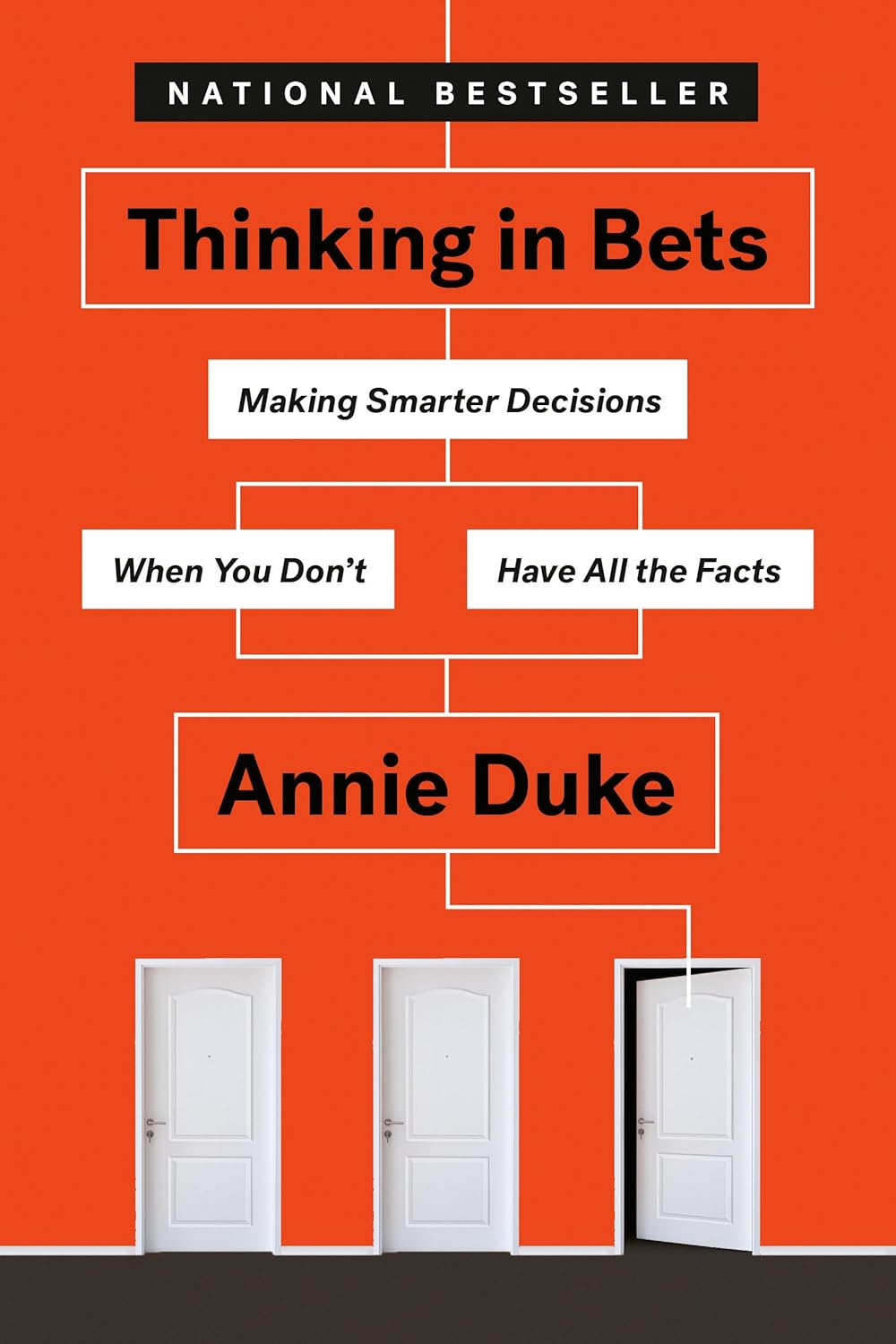
Annie Duke, the former world champion poker player who earned a PhD in decision analysis, wrote a book called Thinking in Bets that Marks considers essential. The core idea: we can reduce our analytical process to structuring things as bets. The key insight comes from sports betting — it is not just about which outcome is more likely, but whether the payoff for betting on the less likely outcome is so high that it becomes compelling. That is exactly how markets work, and it is the bridge to contrarian investing. Marks published a memo in January 2020 titled ‘You Bet!’ about Duke’s approach, and the framework has shaped his thinking ever since.
Consensus is already in the price — being contrarian is essential
The consensus on every subject is already embodied in every asset’s price. You don’t usually make much money by betting on what everybody else loves. The big money is made betting on the things they hate — which, as a result, are cheap, if you’re right. But Marks is careful: contrarianism is not simply doing the opposite of the crowd. The real process is deeper: you must understand what the consensus thinks, what you think, where the consensus is wrong, why they think that way, and what could expose the error. That is a high bar, and it means you cannot be contrarian routinely — only when the analysis justifies it.
Dare to be great: you have to be a loner to be exceptional
In his 2015 memo Dare to Be Great, Marks laid out three requirements for exceptional investing. First, you have to dare to be different — your portfolio must differ from the crowd or you cannot distinguish yourself. Second, you have to dare to be wrong — you must take on unpopular positions, which means accepting the real possibility of being incorrect. Third, and hardest, you have to dare to look wrong — even if you are right, it will not be clear for some time, and in that period you will look out of step, be criticized, and feel inadequate. You have to be comfortable existing outside the mainstream, which is fundamentally a loner’s disposition.
Surviving being wrong: the partner who makes it possible
How does Howard Marks handle the periods of looking wrong? He credits two things. First, a quirk of personality — he has always been something of a loner and believes deeply in the power of the brain to reason through uncertainty. Second, and more importantly, his partner Bruce Karsh. Together they bought $650 million a week for 15 weeks following the Lehman Brothers bankruptcy — $10 billion total — supporting each other through decisions that felt terrifying at the time. When you have a partner you respect who supports you, what would be individually impossible becomes feasible. After doing this successfully a few times, you develop a kind of muscle memory — you recognize the feeling and say to yourself, “oh yeah, this is one of those.” Having been proven right in the past builds a deep respect for your own process.
Taking the market’s temperature
Marks describes his method for gauging market psychology as qualitative, not quantitative: he looks at what opinions are being expressed, how uniformly and strongly they are held, and how self-satisfied the people holding them appear. During bubbles, the people making the most money are doing it for the silliest reasons — their justifications don’t hold up to scrutiny. The current reading is moderate, and the widespread uncertainty he observes is actually healthy. Returning to Mark Twain’s wisdom, being uncertain is the natural and correct state for an investor — when you are certain, that is when you are in danger.
The illusion of knowledge and the power of observation
Everybody has access to the same data and knows what happened yesterday — the edge is in figuring out what it means. Marks describes himself as an observer rather than a data gatherer: he reads two or three newspapers a day and The Economist, but the most important work is sitting and thinking about the implications of what is happening. He sensed the 2008 financial crisis coming not because he understood subprime mortgages — he didn’t even know they existed — but because he observed that markets were behaving in a carefree, non-risk-conscious manner, which is always the most dangerous condition. The historian Daniel Boorstin said it best: the enemy of knowledge is not ignorance, it is the illusion of knowledge.
If you have to be right all the time, don’t become an investor
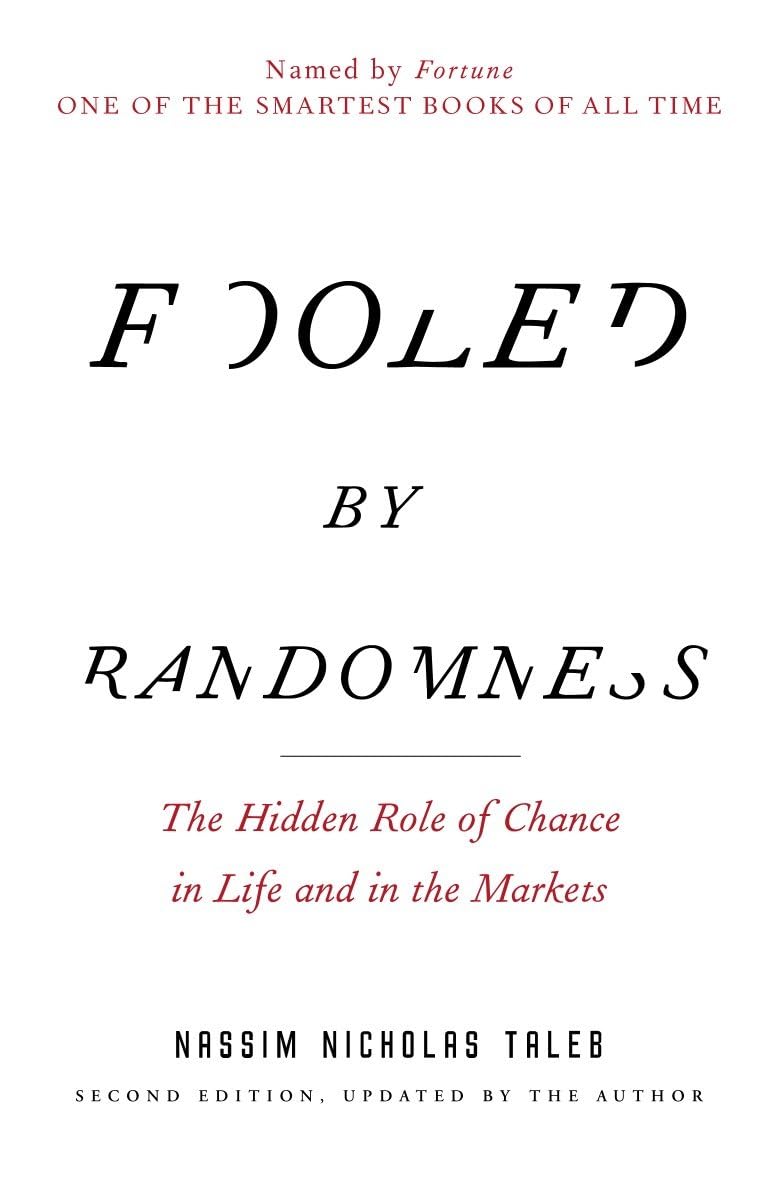
His most important advice to young people considering a career in finance: understand that you cannot be right all the time. Taleb contrasted investing with dentistry — a dentist who learns to fill a cavity correctly will succeed every time, but there is nothing in investing where you can be right every time. If you are right 60% or 70% of the time, you will be among the smartest people in the world. Investing is a great intellectual puzzle with many layers to peel back like an onion, but you have to equip yourself philosophically for the ups and downs of being wrong. And you need an apprenticeship — learning from somebody else who knows how to do it.