Stan Druckenmiller — Macro Outlook (Norges Bank)
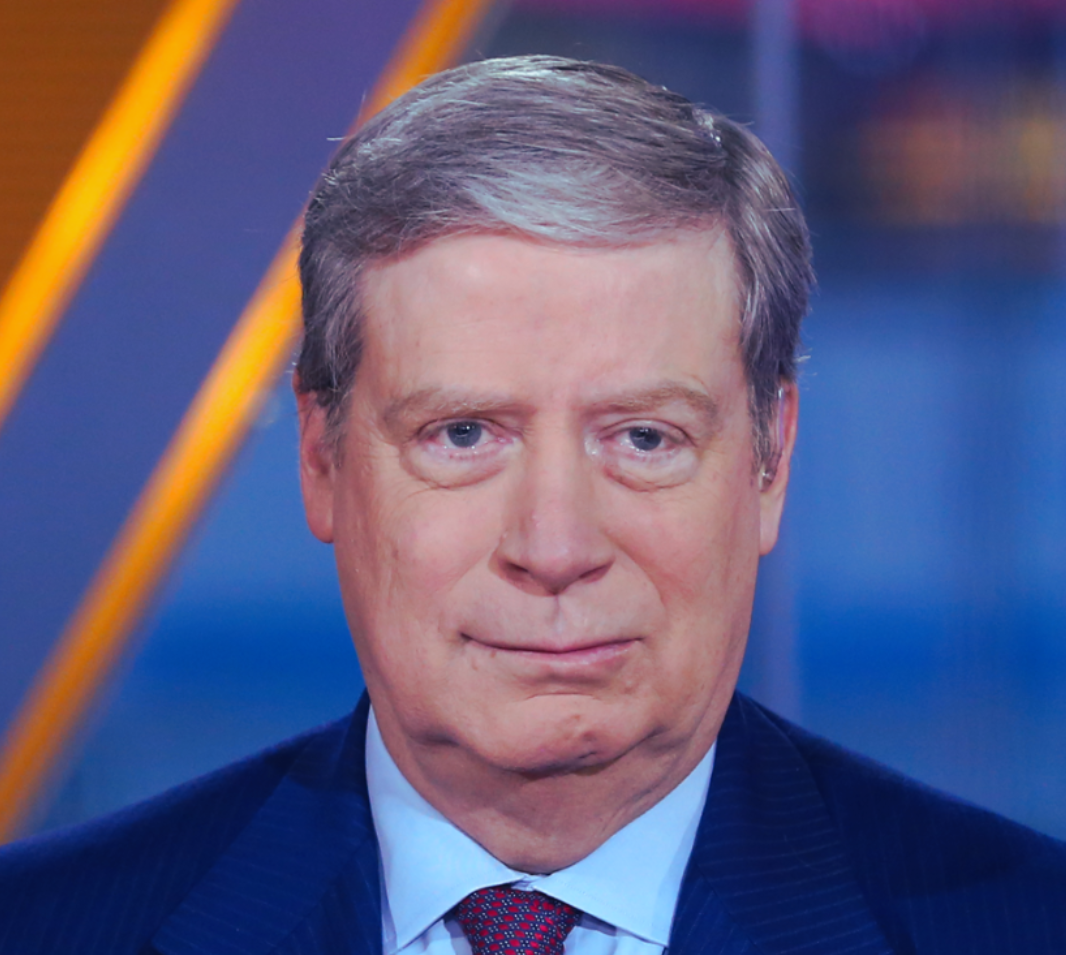
Interview by Nicolai Tangen
Norges Bank Investment Management’s annual investment conference brings together the world’s leading investors and thinkers for in-depth conversations on markets, macroeconomics, and long-term investing. Hosted by NBIM CEO Nicolai Tangen, the conference draws on the perspective of managing Norway’s sovereign wealth fund — the largest in the world.
Druckenmiller sits down with NBIM CEO Nicolai Tangen to explain why this is the most uncertain macro environment he has encountered in 45 years — an unprecedented sequence of 11 years of free money, a broad asset bubble, and one of the fastest rate-hiking cycles in history. He shares his current positioning across equities, currencies, and gold, his philosophy of patience during uncertainty, and the framework he uses to navigate a market regime he believes has no historical parallel.

The most uncertain environment in 45 years
Druckenmiller explains why this is the most uncertain macro environment he has encountered in his 45-year career: 11 years of free money created a broad asset bubble, followed by a 500-basis-point rate hike in 12 months — a sequence with no historical parallel. He is in the hard landing camp but will not bet big because bonds are not screaming bargains with the 10-year at 3.5% and the Fed at 5.25%. The response to Silicon Valley Bank — erasing five to six months of balance sheet reduction in four days — shook his faith that the Fed would hold the line in a hard landing, noting that historically Jerome Powell is not a profile in courage.
Equities, dollar, and gold — where the risk is
If forced to pick a direction on equities, Druckenmiller would short economically sensitive stocks like the Russell 2000 — but AI makes things complicated: NVIDIA could rise even in a recession given the AI arms race, just as oil and chemicals went up in 1973–74. The one area he feels reasonably comfortable: long the US dollar, since currency trends run two to three years and he expects less tightening from the US going forward relative to other countries, especially after the weaponisation of the dollar. He is also long gold for the same structural reasons. His overall posture: equities roughly 3% net short, fixed income minimal except Japanese government bonds where the risk-reward is “ridiculous.” His P&L barely moves 30 to 40 basis points a day.
The math of never losing money
Tangen asks about Druckenmiller’s emphasis on not losing money. It is just mathematics: down 50% requires up 100% to get back to even. His audited track record — a little over 30% net per year for 30 years — was achieved not by making 20–30% every year, but by keeping bad years at zero to 5% and then throwing in a few 50s and 60s. The principle: when you really see the ball, swing really big; when you do not see the ball, do not swing. This compounding math is the central insight behind his entire approach to risk and is what separates great long-term track records from merely good ones.
Invest then investigate — pattern recognition and technical discipline
Asked how much is analysis versus gut feel, Druckenmiller responds: “with analysis comes paralysis.” He cites Soros’s mantra — invest, then investigate. In a fast-moving world, if he gets an idea he thinks is attractive, he buys first and has his analysts back into it. If they prove him wrong, he gets out. He started in the 1970s with a chartist mentor and still uses technical analysis for two purposes: rate-of-change data tends to lead and helps find things others are not looking at, and charts provide a discipline check on falling in love with a thesis. His mentor’s framework: out of 6,000 stocks, you can always find 20 with both a good chart and a good fundamental story — if either one does not fit, do not do it. Being stubborn but agile is the hallmark of a great investor.
Questioning your beliefs — and why price action has degraded
How does Druckenmiller question his own beliefs? Price action is his primary check — if his thesis is bullish but the stock is not moving, he re-examines the thesis repeatedly. He also surrounds himself with young people unafraid to argue with him: if someone has been around too long and agrees with everything he says, they are not around much longer. But he acknowledges that price action versus news is not the reliable signal it was 20 to 30 years ago, when a stock that opened down 10% on bad earnings and closed up was almost guaranteed to be higher in three months. Algorithmic traders, factor investors, and active hedge funds have all learned the same tricks and degraded the signal. He adapts rather than complaining — it is just a new world.
Be patient for the fat pitch
Asked how to make money in the next two years, Druckenmiller offers a structural view: markets may not be higher in 10 years — like the 1968 to 1982 period — but there will be massive swings within that. Rough roads are ahead, and when the central bank responds in “some crazy way,” it will create opportunities like 1970–72 or 1976–78 where you can make a lot of money. Currency markets are particularly interesting. The key discipline: do not dig yourself into a hole now when conviction is low, because the opportunities will be amazing as this movie unfolds over the next year in macro and equities.