Warren Buffett — Investment Strategy (Fortune MPW Interview)
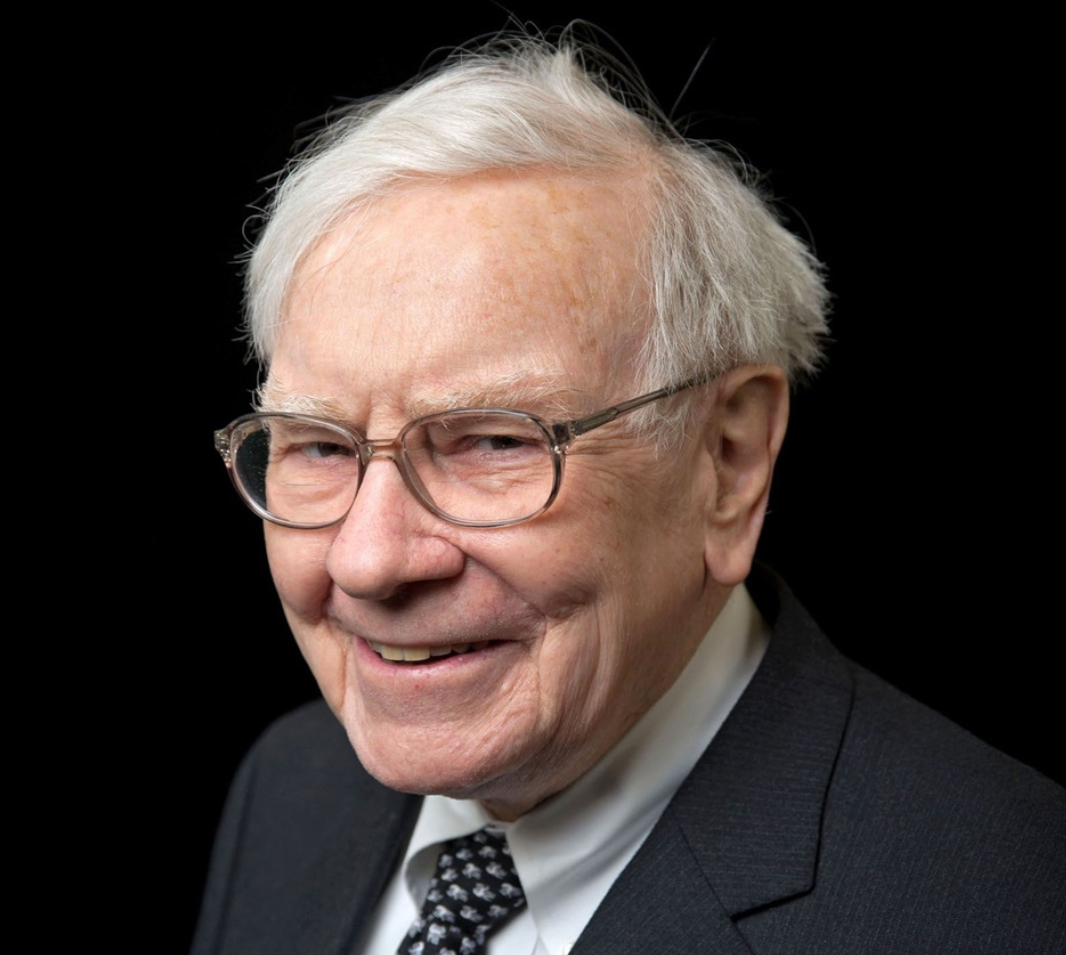
Interview by Fortune
Fortune's Most Powerful Women Summit is an annual gathering of the world's most influential business leaders. Its interview segments feature candid, unscripted conversations with figures who rarely speak this openly about markets and decision-making.
Warren Buffett distills his investment philosophy in a conversation at Fortune's Most Powerful Women Summit. He explains how he evaluates businesses, why he ignores short-term market movements, and the timeless principles — circle of competence, durable competitive advantage, patience — that underpin Berkshire Hathaway.

High returns, no receivables — the Buffett definition of a great business
Buffett defines a great business simply: high return on tangible capital. Car dealerships work because you floor-plan inventory, do $100M+ in volume per location, and tie up almost no capital. Banks, by contrast, were extraordinary when leverage rules were loose but are now merely good businesses — regulators force them to hold more net worth per dollar of assets, compressing returns on equity. The bigger lesson: capital efficiency matters as much as earnings power, and even a great business becomes a bad investment if you overpay.
The zone of reasonableness: Buffett's framework for reading broad market valuation
Asked about overall market valuation, Buffett explains his "zone of reasonableness" concept: stocks almost never trade at a precise fair value, but spend most of their time within a range where buying good businesses at reasonable prices still works. He's only felt compelled to speak out publicly about five times in his career — the most recent being his October 2008 New York Times op-ed saying stocks were cheap. He uses total market cap to GDP as a rough gauge, not a precise formula. Stocks outside that range — either dramatically expensive or clearly cheap — are rare events worth acting on.
The missed fax: the night one phone call could have changed the Lehman collapse
Buffett tells the story of the Lehman weekend in September 2008. Barclays wanted to buy Lehman but needed shareholder approval — at least 30 days. CEO Bob Diamond called Buffett in Edmonton asking him to guarantee Lehman's contracts during that window, so Buffett said "fax me the terms and I'll respond by midnight." He came back to no fax — the hotel didn't have one. He gave up and slept. Ten months later he discovered the voicemail had been sitting unheard on his phone the whole time. It illustrates how chaotic and contingent the 2008 crisis actually was — a missed fax may have changed history.
Inside 2008: AIG rescue, the fog of war, and why macro never changes how Berkshire invests
Buffett discusses the AIG crisis: he was approached the same weekend to value AIG's property/casualty subsidiaries, concluded it was "a mess of spaghetti," and told them not to waste time on him. His core judgment: AIG would have been bankrupt within 48 hours without the Fed's $85B injection, regardless of whether the terms were fair. The broader lesson is how chaotic real-time crisis decision-making is — "the fog of war." And yet none of it changes how Berkshire operates: in 55 years he and Munger have never adjusted decisions based on who's in power, where interest rates are going, or political gridlock in Washington.
America's marvelous machine: why 2% growth is more extraordinary than it sounds
Responding to a JPMorgan question about slow post-crisis growth, Buffett pushes back on the pessimism. Across Berkshire's 70+ businesses he's seen steady, uninterrupted improvement since 2009 — no double-dips, no sharp deceleration. His mathematical case: 2% real GDP growth minus 1% population growth = 1% real per capita growth. Over one generation that's a 20%+ per capita gain in real income. Real GDP per capita is ~$54,000 — a 20% gain is $10,000 more per person. "That's enough to eliminate all poverty." The system that has unleashed human potential since 1776 is still working, even if the pace feels disappointing.
Dexter Shoe and stocks going down: recognizing bad businesses and buying weakness
Jenny Johnson asks when to give up on an investment. Buffett's signal: good management producing bad results — that tells you it's the business, not the people. He describes buying Dexter Shoe in the early 1990s for $400M in Berkshire stock, watching it fail immediately from foreign competition, and seeing it go to zero. Worse: that stock is now worth ~$5 billion. But a follow-up question reveals his attitude toward stocks going down in general — he gets euphoric. The stock doesn't know you own it, doesn't care what you paid. Stocks going down means you can buy more of a business you understand for less money — exactly like getting a grocery item cheaper than yesterday.
Homebuilding lags and the no-brainer 30-year mortgage argument
The final audience question asks about lagging homebuilding despite low rates. Buffett says it's surprised him — autos have recovered to 17M units per year while housing has trailed. His explanation: household formation collapsed during the recession as people moved in with parents and in-laws, but the pent-up demand will eventually express itself ("I have a lot of faith in hormones"). He closes with a memorable argument: the 30-year fixed mortgage is one of the most asymmetric instruments ever created — if rates drop you refinance, if they rise you keep the deal. "I can't get that one-sided an instrument at Berkshire Hathaway."