
Charlie Munger
Charlie Munger was Vice Chairman of Berkshire Hathaway and Warren Buffett's longtime partner. A self-taught polymath who read voraciously across disciplines, he developed the concept of mental models — applying insights from psychology, physics, biology, and history to investing and decision-making. His unconventional thinking and blunt wit made him one of the most quoted and admired figures in the investment world. His speeches, talks, and mental model frameworks are compiled in Poor Charlie's Almanack — one of the most sought-after books in investing.
Videos
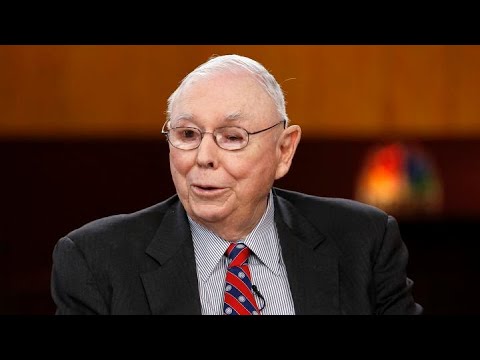
Is the golden era of investing over? Harder now — but not forever
▶ 4m 50sMunger opens by saying the golden era of investing is not gone permanently, but it is genuinely harder now: valuations have risen and competition has become more intelligent, more aggressive, and more numerous. The fabulous track records of his generation were built on a rare post-war window when roughly 90% of natural stock buyers grew so discouraged that equities were left deeply undervalued — a generational opportunity that rarely repeats. He acknowledges 2008 may have been another such generational low, and notes that the Daily Journal's well-timed bank stock purchases around that period were partly accidental. He then turns to QE: the central bank interventions were necessary — without them, the world risked a revisitation of the conditions that brought Hitler to power — but they had the ironic accidental effect of bailing out the asset-rich while supposedly helping the poor.
"The opportunities that my generation had came from a period where about 90% of natural stock buyers got very discouraged about stocks. That's what created those fabulous records. It was a rare opportunity — and the inequality that came from QE wasn't malevolence, it was an accident."
Political fixes for inequality, the national debt, and why two-party balance works
▶ 4m 56sMunger is skeptical of popular proposals to address inequality — 70% tax brackets, wealth taxes, banning buybacks — arguing the QE-driven inequality spike was a fluke that cannot easily recur. He prefers the current mixed system: two parties alternating control, a social safety net that is necessary but not extravagant. His principle is that the country has run best when neither party held total power. On the national debt at $22 trillion: uncharted territory, but great nations all decline eventually and he is not panicking about the timing. On politicians worth admiring: Bloomberg ran New York reasonably well; otherwise the political class is not his favorite genre, and he would rather stay cheerful than rage at things he cannot change.
"In my lifetime the country has run better because we had two parties, each of which was partly in control. If either party had been totally in control of all branches of government, I think we'd be worse off today."
China, trade, and why Munger stays bullish on cooperation
▶ 2m 49sMunger says some trade tension with China is natural: Ricardo's law of comparative advantage did not foresee that free trade would allow a uniquely able nation to rise as rapidly as China has, disrupting industries built on the old order. Some limits on free trade are acceptable — particularly in strategic sectors like aerospace. But his deeper conviction is structural: both countries have too much to lose from genuine conflict. Munger states plainly that he prefers the US relationship with China to its relationship with Russia, and anticipates that rational self-interest will drive continued cooperation despite the tensions.
Nuclear war: the defining unsolved problem of Munger's lifetime
▶ 2m 15sAsked what worries him most, Munger answers without hesitation: nuclear war. He has worried about it every single day since the hydrogen bomb was invented, calling it mankind's defining unsolved problem. He ranks it far above AI or climate change — global warming is something humanity can adapt to, but a nuclear exchange would be an unrecoverable disaster. He points to the deteriorating US-Russia relationship as a cautionary example of what the US-China relationship must avoid, and notes that this concern has shaped his worldview for decades.
Amazon, Bezos, and why driving out the rich is dumb policy
▶ 5m 20sWhen Amazon withdrew its HQ2 bid from New York, Munger calls Amazon a phenomenon of nature — something he would not have predicted and would not predict stopping. He admires Bezos for confronting the National Enquirer blackmail head-on, viewing directness in the face of problems as an admirable trait. On the broader policy question: states that attract wealthy residents — Florida, Hawaii — have been smarter than those driving them out. Connecticut has seen high-end real estate fall 50%; California is making the same mistake. Munger's logic is simple: rich residents keep hospitals busy, do not burden schools or prisons, and pay enormous taxes. Driving them out punishes the state's own finances for ideological satisfaction.
"Driving the rich people out is pretty dumb if you're a state or a city. They keep your hospitals busy, they don't burden your schools or your prisons — who wouldn't want rich people?"
Bad behavior in finance, the GFC, and staying far from the whirlpool
▶ 4m 40sMunger calls the behavior of the mortgage and banking industry in the lead-up to the financial crisis obscene — lying, cheating, and delusional assumptions that he compares to adulterating baby food. He believes the perpetrators deserved harsher consequences and agrees with Elizabeth Warren on this point, despite disagreeing with her on almost everything else. On the ongoing monetary risk: both parties prefer to believe money printing has no consequences, but Munger points to the Roman Empire and Weimar Republic as warnings. His personal rule for navigating truly dangerous things is not to see how close you can come without being consumed — but to stay a long way away. He would rather rubberneck at the whirlpool from a distance than try to run the rapids.
"If God were just, there would have been more penalties. They were bailed out because the country had to do it — but it never should have been allowed to run that disgusting lying and cheating and delusional assumptions."
What surprised Munger: central banks printing money to buy private assets
▶ 2mAsked what recently caught him off guard, Munger points to central banks: he was surprised when they started printing money and buying massive amounts of private securities. QE worked — so far — but Munger is characteristically cautious: all human successes are successes so far. Whether Japan can simply keep doubling its national debt, he genuinely does not know, and he distrusts anyone who claims to. The deeper concern is structural: money printing is politically convenient, so both parties have an incentive to believe it has no consequences. Munger's response is to stay far away from things he considers big and dangerous.
Why economists are always wrong — and the secret to a long happy life
▶ 4m 45sMunger explains why he distrusts economists: economics is not like physics. The same policy recipe applied in a different era gets a different result. You cannot step in the same river twice — the man is different and so is the river. He closes with his formula for a long and happy life, which he calls almost embarrassingly simple: no resentment, don't overspend your income, stay cheerful despite your troubles, deal only with reliable people, and do what you are supposed to do. He says he had this figured out by age seven, having noticed irrationality in the adults around him from an early age. On children and parenting: they arrive largely pre-made, and he has found no way to alter what was built in at birth.
"You don't have a lot of resentment, you don't overspend your income, you stay cheerful in spite of your troubles, you deal with reliable people, and you do what you're supposed to do. All these simple rules work so well — and they're so trite."
The uncommon sense of investing
▶ 2m 33sMunger explains why “common sense” is a misnomer — what people mean is uncommon sense, because the standard human condition is ignorance and stupidity. Investors and ordinary people alike do not think clearly about money, sex, or gambling because of widespread “miscognition.” The path to improvement is twofold: eliminate your own miscognitions, and recognise them in others. The Berkshire annual meeting works because shareholders feel they are on the right side of something — Munger calls it a “good cult.”
"When people use the word common sense, what they mean is uncommon sense — because the standard human condition is ignorance and stupidity."
Terra incognita: the great money-printing experiment
▶ 2m 53sMunger describes the post-2008 era as “total terra incognita in economics” — never before had so much money been printed and spent so fast, with so much public and private debt bought back. No one knew for sure how it would work. It was risky but necessary: Congress had no other tools because democratic inertia blocked conventional fiscal stimulus. Both parties cooperated — Munger notes wryly it was “the last time.” His philosophy through it all: “We just keep swimming — sometimes the tide is with us, sometimes against, but we keep swimming either way.”
"We never printed money so much and spent it so fast and bought back so much debt, public and private. This is total terra incognita in economics. Nobody knew for sure how it was going to work."
The Tooth Fairy of debt — and why Singapore gets it right
▶ 3m 2sPresidents have always lobbied the Fed to keep rates low — “of course it’s not a good idea.” The best example in the world is Singapore: zero national debt, never prints money and spends it, and it is one of the most successful places on earth. On those who claim US federal debt is not a problem: “If you believe that, you believe in the Tooth Fairy — because then we don’t have to have any taxes ever, we’ll just print money and live happily ever after.” But the truly hard question is knowing when printing becomes counterproductive — and Munger admits nobody really knows where that point is. On Jay Powell: “as good a choice as we could have made.”
"If you believe federal debt is not a problem at all, you believe in the Tooth Fairy — because then we don’t have to have any more taxes ever, we’ll just print money and live happily ever after. It obviously won’t work."
Inequality was an accident — and the blindness of partisan anger
▶ 1m 55sWealth inequality, Munger argues, was an accidental byproduct of a correct governmental decision — printing money and driving rates to zero lifted asset values for those already rich, but nobody intended it. “It will go away by itself — there’s no reason for a lot of screaming.” On progressive proposals: he likes Elizabeth Warren’s manner but not her attitude — “I don’t think she’s studied Adam Smith enough.” As for AOC, “I don’t think she knows who Adam Smith was.” More broadly, he refuses to be consumed by political anger: “Both parties are so partisan now they’re blinded by their anger.” Anger feeds on itself — he controls it and recommends the same to both parties. He misses the Eisenhower-Stevenson era’s civility.
"Both parties are so partisan now that they’re blinded by their anger. I don’t want to be blinded by my anger, so I control it — and I would recommend it to both parties."
How Munger shifted Buffett from cigar butts to great businesses
▶ 2m 7sMunger describes his most consequential contribution to Berkshire: persuading Buffett to move beyond Graham-style cigar butt investing. “It was perfectly obvious — he made so much money in the other technique it was hard for him to leave something that worked so well, but it was not going to scale.” The shift: start looking for investment values in great businesses that were temporarily under pressure. “It changed everything for the better — now we could scale up to the big time.” Asked what brand Buffett would buy if he could only own one forty years ago: Gillette. Today? Still Coca-Cola — “one hell of a brand,” and one where Munger’s judgment is far better than on internet companies.
"It was not going to scale. So he started looking for investment values in great businesses that were temporarily under pressure. It changed everything for the better — now we could scale up to the big time."
Kraft Heinz, Wells Fargo, and Boeing: three case studies in business judgment
▶ 3m 10sThree quick case studies in business judgment. Kraft Heinz: Heinz ketchup was the stronger brand and Kraft cheese the weaker — one acquisition worked brilliantly, the other poorly. “Welcome to adult life — it happens to everybody.” Wells Fargo: Tim Sloan should still be CEO — he was not responsible for the crazy incentive system that created the fake-accounts scandal. He was thrown out “the way you take out the charwoman when you’re really gambling.” Boeing 737 MAX: Boeing has probably the best 60-year safety record in the world — this was a very unusual lapse, not a symptom of software becoming too powerful. They will fix it, and there may not be another one for 60 years.
"Welcome to adult life — it happens to everybody. One acquisition worked brilliantly and the other worked poorly."
Billion-dollar deals overnight: Berkshire’s non-bureaucratic advantage
▶ 2m 55sMunger cannot recall a single example in his entire life where Berkshire’s practice of doing billion-dollar deals on short contracts ever blew up on them. “Keeping it simple — what has worked against us? We’ve made mistakes, but they weren’t because we kept it simple.” The chief advantage Berkshire has had in accumulating a good record is avoiding pompous bureaucratic systems and giving power to very talented people to make very quick decisions. On succession: the next generation are steeped in these non-bureaucratic ways, and it is amazing how good they are. “Getting it done is when it’s done, not when it’s in somebody else’s inbox.”
"Getting it done is when it’s done, not when it’s in somebody else’s inbox. If everybody’s in a big committee meeting all the time, you’re worn out at the end of the day — you haven’t done anything."
China’s remarkable rise — and the Lee Kuan Yew connection
▶ 6m 29sNo nation that big has ever advanced as fast as China did — and it did so using the savings of poor people (a 50% savings rate), not the wealth of the rich world. The secret: China copied Singapore’s Lee Kuan Yew. “The Communist leader said I don’t care if the cat is black or white as long as it catches mice.” Munger is a huge admirer of what the Chinese have accomplished and remains quite optimistic — “they’re getting ahead, they’re not moving backward.” On US-China relations: “If both sides have any sense, they will be better and better friends and adjust all differences — it’s just raving madness on either side not to make a friend of the other really powerful nation on earth.”
"No nation that big has ever advanced that fast — and they did it by having a bunch of poor people save half their income. They did not use the wealth of the rich world to get ahead."
The Google miss — and the art of predicting the predictable
▶ 4m 7sMunger says he is ashamed of missing Google — Berkshire could see from its own operating companies that Google’s advertising was working way better than other advertising. “We just weren’t paying enough attention.” He has never owned Amazon despite being a huge admirer of Bezos — “it’s always been too complicated and uncertain for my particular temperament.” On the flood of unprofitable tech IPOs: “It’s not my scene. I’m looking for things where I think I can predict what’s going to happen with a high degree of accuracy — and I have no feeling that I can do that with Uber.” The meta-lesson: Munger’s edge is not in analysing every opportunity, but in knowing which ones sit within his circle of competence.
"I’m looking for things where I think I can predict what’s going to happen with a high degree of accuracy — and I have no feeling that I can do that with Uber."
Share repurchases: simple morality
▶ 5m 19sMunger defends share buybacks with characteristic bluntness: “If you had a partnership of three of your crippled relatives and one needed some money, wouldn’t you buy out the broke one with the company’s money? It’s just simple morality.” But he draws a sharp line: Berkshire will only buy back shares when they are too cheap — never to prop up values at inflated prices, which he calls “an improper use of the technique.” Some companies have overdone it, repurchasing even when prices were too high. Should there be laws? No — “we shouldn’t be telling people what the right price is.”
"If you had a partnership of three of your crippled relatives and one of them needed some money, wouldn’t you buy out the broke one with the company’s money? It’s just simple morality."
The Mozart story: career advice for the young
▶ 4m 9sYoung people often ask Munger how to become a billionaire. His response is the Mozart story: a 22-year-old tells Mozart he wants to compose symphonies. Mozart says he is too young. The young man protests: “But you were composing at 10 years old.” Mozart replies: “Yes, but I wasn’t running around asking other people how to do it.” Munger’s own philosophy — being very rational and disciplined — will work for anyone, but “floating around” between careers trying to outdo others in their own territory will not work for most people. He credits luck as well as skill: “The combination of luck and skill — that’s what all good records are.” His Army experience reinforced his hatred of bureaucracy and his preference for controlling his own destiny.
"The young man says, “Mozart, I want to start composing symphonies.” Mozart says, “How old are you?” He says, “22.” Mozart says, “You’re too young.” He says, “But you were 10 years old!” Mozart says, “Yes, but I wasn’t running around asking other people how to do it.”"
The unscripted genius of Berkshire
▶ 3m 3sMunger reveals that he and Buffett say absolutely nothing to each other before sitting down at the annual meeting. “You have no idea what’s gonna happen — that is correct.” The spontaneity is deliberate: if they scripted things, people would not like it. He cannot sign the Giving Pledge because he already transferred more than half his wealth to his children — his late wife would have preferred it that way. On the future of Berkshire: “What worked in one era doesn’t have to be duplicated. I think it was a historical accident — we didn’t do it on purpose, we drifted into it, and when it worked we fanned the flames.” Some later generation will have a different system. “There’s more wise-assery in our meeting than would be appropriate forever — no, I’m the principal wiseass.”
"I think it was a historical accident — we didn’t do it on purpose. We just sort of drifted into it. When it worked, we fanned the flames. But we didn’t create it with any forethought."